
This week’s AI news cycle captured where the AI sector stands as 2025 draws to a close: Geopolitical pressure continues to strongly influence hardware access, major media companies are formalizing their relationship with AI model makers, and the U.S. federal government is asserting greater federal control over AI regulations.
U.S. Clears Nvidia H200 Sales to China as Beijing Responds Cautiously
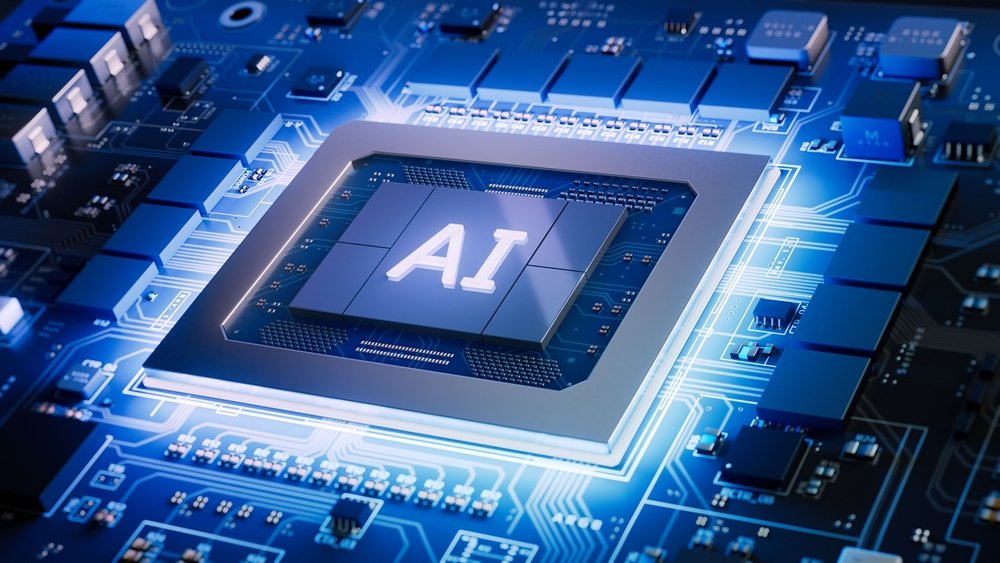
In a major shift in U.S. export controls on advanced AI hardware, the Trump administration confirmed this week that Nvidia will be allowed to sell its H200 GPUs in China, on the condition that the U.S. government will receive 25% of the sales. The H200, built on Nvidia’s Hopper architecture and widely used for LLM training and inference, had previously been subject to uncertainty as export controls evolved to address newer generations of AI accelerators.
(Shutterstock)
China’s response has been cautious. According to reporting from the Financial Times, regulators in Beijing are discussing ways to permit only limited access to the H200 as the country continues its quest for semiconductor self-sufficiency. Proposals under consideration would require buyers to seek approval before purchasing the chips and to justify why domestic alternatives cannot meet their needs. No final decision has been made.
This year, China has been focused on reducing its reliance on U.S. technology. During earlier U.S. restrictions, Beijing stepped up support for domestic chipmakers through measures such as tighter customs checks on imported processors and incentives for data centers using local hardware. While major Chinese technology firms continue to prefer Nvidia’s products for large-scale AI workloads, regulators seem to be indicating that any return of advanced U.S. chips will be closely managed.
OpenAI Deepens Media Ties with Disney and Rolls Out GPT-5.2
OpenAI made two more headlines this week, announcing a content and technology partnership with Disney and releasing GPT-5.2, the latest update to its flagship model family. The Disney deal consists of a three-year, $1 billion agreement that formally integrates the entertainment company’s intellectual property into OpenAI’s platforms. Under this deal, over 200 characters from Disney, Marvel, Pixar, and Star Wars will be licensed for use in user-prompted videos on OpenAI’s generative AI video tool, Sora, and in image generation. Users will not have access to actor voices or likenesses as part of the arrangement.

(Summit Art Creations/Shutterstock)
Disney will also become a major customer of OpenAI’s technology, deploying ChatGPT internally and exploring ways to incorporate fan-generated content into its Disney+ streaming service. Disney executives say this is a strategic move to participate in the rapid growth of generative AI rather than resist it, while implementing measures to protect creator rights and brand integrity.
OpenAI also released GPT-5.2, an update introducing incremental improvements in reasoning, tool use, and multimodal capabilities. The company said the new model has enhanced coding performance and contextual understanding of long documents and says it is now more useful for tasks like spreadsheet and presentation generation and complex multi-step projects. The rollout comes after CEO Sam Altman reportedly launched an internal “code red” earlier in the month to accelerate development in the face of competition from Google’s Gemini models, particularly its latest Gemini 3. GPT-5.2 was made available to paid users and API developers this week.
White House Acts to Limit State AI Regulation
President Trump signed an executive order directing federal agencies to limit the impact of state-level AI regulations, arguing that a fragmented regulatory environment threatens U.S. competitiveness. The order calls for agencies to challenge certain state laws and ties compliance with federal guidance to eligibility for some funding programs. The order immediately drew criticism from states that have already legislated AI rules focused on transparency, safety, and consumer protection. Supporters of the order say it provides clarity for companies deploying AI systems nationwide, while opponents warn it weakens oversight at a moment when AI tools are becoming more autonomous and pervasive.

(VideoFlow/Shutterstock)
“This is an executive order that orders aspects of your administration to take decisive action to ensure that AI can operate within a single national framework in this country, as opposed to being subject to state-level regulation that could potentially cripple the industry,” said White House aide Will Scharf as the order was signed in the Oval Office.
The executive order instructs the Justice Department to create an “AI Litigation Task Force” for challenging state AI laws in court and directs the Commerce Department to assess whether states with conflicting regulations should be blocked from certain federal funds. It also directs the Federal Communications Commission to begin a proceeding within 90 days to consider adopting a federal reporting and disclosure standard for AI models that would preempt conflicting state laws. The Federal Trade Commission is also instructed to issue a policy statement clarifying when state laws that require changes to truthful AI outputs may be preempted under the FTC Act’s prohibition on deceptive practices. In addition, the administration ordered the preparation of a legislative proposal aimed at creating a uniform federal AI framework that would formally preempt state laws deemed inconsistent with federal policy.
The post This Week in AI: Nvidia in China, OpenAI’s Disney Deal, and Federal AI Oversight appeared first on AIwire.
