

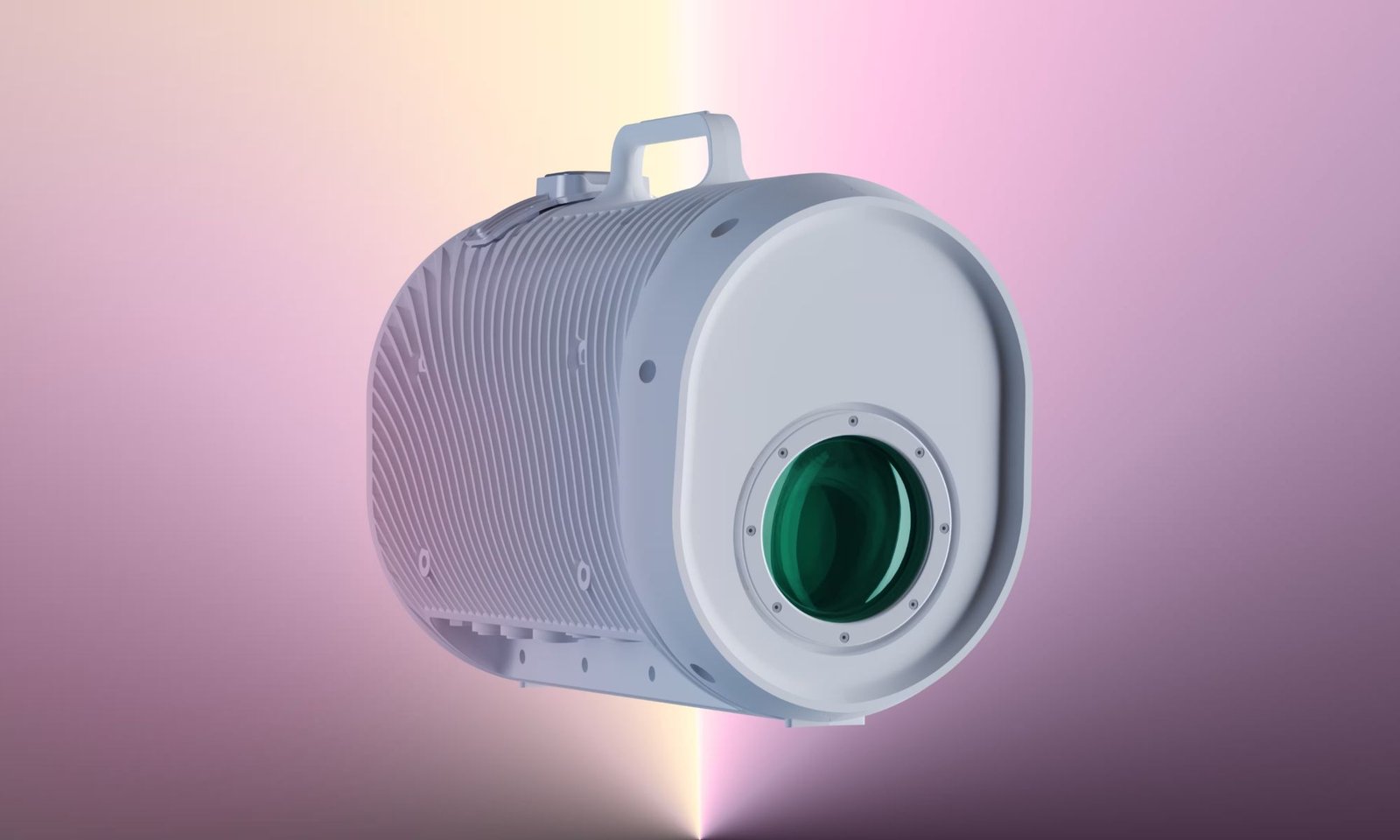
If three major European aerospace players (Airbus, Thales, and Italy’s Leonardo) joining forces on satellites to challenge Starlink didn’t shake Elon Musk enough, here comes another twist. A startup from Alphabet has rolled out a small device that sends fiber-level internet speeds through the air. In my Taara Beam preview, I walk you through a Starlink rival that brings broadband to remote spots without tearing up the ground for cable.
Design
The 17-pound Taara Beam looks like a projector, yet it pushes up to 25 Gbps of data through near-infrared light. Taara pairs mechanical steering with its first wave of integrated photonics, which shrinks electronic light control into a compact, field-ready unit. For context, the Beam comes in 50% lighter and smaller than Lightbridge for short metro links.
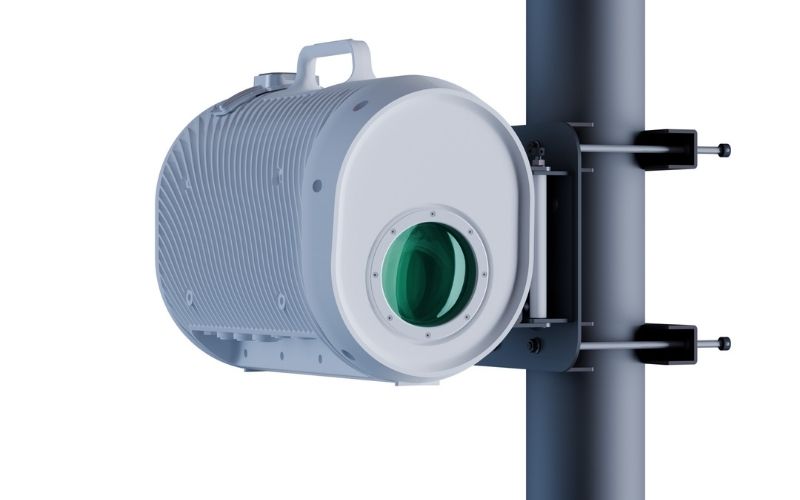
However, the Beam trades some range for size. It covers up to 10 km (6.2 miles), while standard Lightbridge reaches 20 km. Even so, the smaller form should help teams roll it out faster and push wider use.
At its core, the Taara Beam runs on an optical phased array with more than a thousand tiny light emitters. The system tracks, shapes, and steers light through electronic control, which cuts down on bulky moving parts and opens the door to solid-state scale. Since Taara builds the platform on silicon, it follows the same path as semiconductors. Each new generation packs more power at lower cost.
Performance
Weather brings a hurdle. Heavy rain, snow, or thick cloud cover can break an over-the-air light link. Taara tackles that with the Lightbridge Pro system, which claims 99.999% uptime, even during rough weather. For context, Starlink also warns users about short signal drops during storms, with service that picks back up once skies clear.
Price and availability
Taara plans to show off the Beam at MWC in Barcelona next week. The company hasn’t shared exact pricing for the Beam yet. But you can expect flexible options, from hardware sales to connectivity-as-a-service plans. As a benchmark, Starlink home internet in the US runs between $80 and $139 per month, plus a one-time dish fee between $349 and $599 based on plan and location.
Related: MWC 2026 preview: What Google, Samsung, Xiaomi, and NVIDIA have planned
Parting thoughts
Think about what the Taara Beam opens up. It eliminates digging, waiting on permits, and trucking in crews to string fiber. For remote offices, rural towns, event sites, or temporary projects, the Taara Beam could slash deployment time and cost.
I’ll reserve final judgment until pricing lands and field data stacks up beyond controlled demos. But if Taara executes, we won’t frame this as “another Starlink competitor.” We’ll frame it as the moment broadband stopped depending on either digging or launching—and started riding beams of light you can mount on a pole.
Grigor Baklajyan is a copywriter covering technology at Gadget Flow. His contributions include product reviews, buying guides, how-to articles, and more.
