

For the past few years, Apple’s silicon rollouts have been pretty predictable: an annual chip announcement, impressive performance charts, and glowing coverage that reads like an ode to Cupertino. Now that Apple has announced the latest Apple M5 chips—the M5 Pro and M5 Max, one question stands out:
Is this a meaningful leap forward, or just another incremental upgrade wrapped in strong marketing?
Let’s break it down.
What’s New in the Apple M5 Chips?
According to Apple’s official technical overview, the M5 generation brings real improvements in CPU performance, GPU throughput, and AI acceleration compared to the M4.
The base Apple M5 chip still follows the familiar architecture with a balanced CPU/GPU configuration—but refinement is the keyword here. Apple claims gains in multithreaded performance and graphics performance, along with better power efficiency under heavy workloads.
The bigger story sits with the Apple M5 Pro and Apple M5 Max chips. These variants extend Apple’s scaling approach by stacking more cores, increasing memory bandwidth, and expanding GPU capacity for demanding professional workloads.
In practical terms?
These chips are built for creators, engineers, video editors, and developers who need sustained performance.
Apple M5 Pro and M5 Max Performance Gains Explained
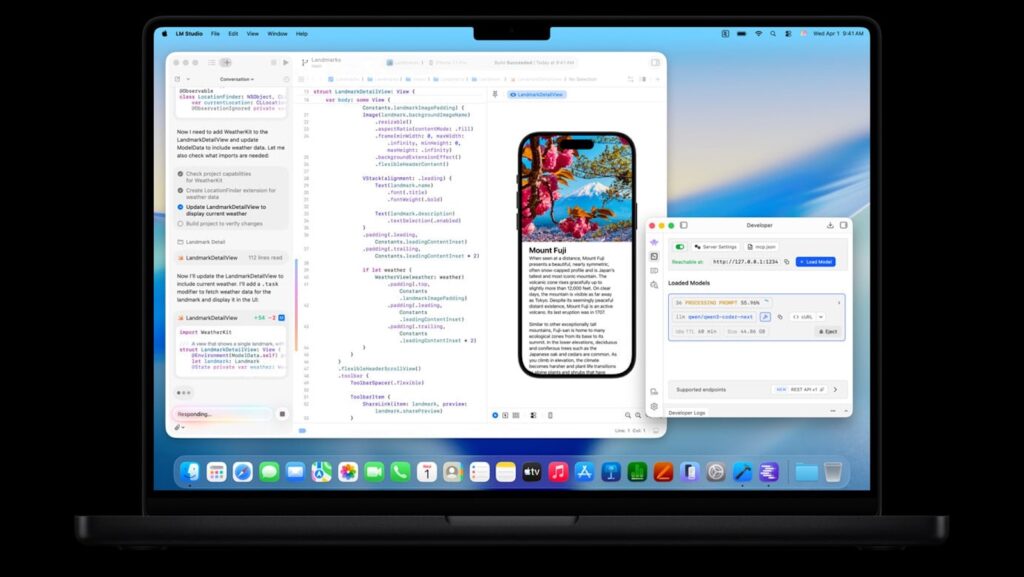
The real value of the higher-end models lies in scaling.
The M5 Pro and M5 Max use Apple’s advanced packaging approach to combine more silicon into a unified system-on-chip design. That means higher core counts, stronger GPU clusters, and significantly improved memory bandwidth.
Compared to previous generations, the upgrades show up most clearly in:
- Heavy 3D rendering workloads
- Large-scale video exports
- Machine learning tasks
- Compiling massive codebases
Independent testing and early benchmarks suggest real improvements — particularly in sustained workloads where thermal efficiency matters.
That said — raw numbers don’t tell the full story.
Apple M5 vs M4: Is the Upgrade Worth It?
Here’s where things get interesting.
If you already own an M4-powered MacBook Pro or MacBook Air, the performance jump to the M5 generation may not feel revolutionary.
Yes — benchmarks show improvement.
Yes — AI acceleration and GPU performance are better.
But visually and functionally, the machines look identical.
The chassis hasn’t changed. The display technology is the same Liquid Retina XDR setup. Battery life is competitive but not dramatically different.
So the real comparison becomes:
- Apple M5 vs M4: incremental improvement
- Apple M5 Pro vs M4 Pro: stronger scaling for professional use
- Apple M5 Max vs M4 Max: performance boost for power-heavy workflows
Upgrade decisions depend heavily on workload intensity — not hype.
What Isn’t New About the Apple M5 Chips
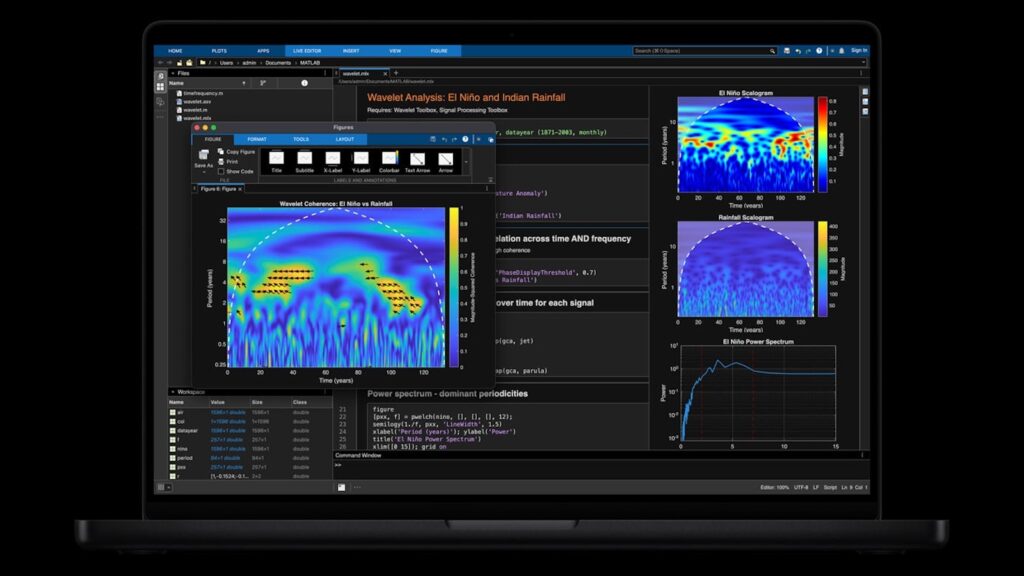
The physical design hasn’t changed much, nor has the ecosystem strategy.
The pricing ladder still moves upward with storage and chip tier upgrades. With the M5 chips, Apple is refining.
That isn’t necessarily a criticism. It reflects maturity in their silicon roadmap. When performance is already strong, generational improvements tend to be about efficiency and optimization rather than radical redesign.
But it also means consumers shouldn’t expect a dramatic “wow” moment unless they’re upgrading from older generations like M1 or M2.
Who Should Upgrade to the Apple M5 Chips?
If you’re coming from:
✅ M1 or M2 — You’ll absolutely notice performance gains.
✅ Intel Macs — The difference is massive.
✅ M3 or M4 — You won’t notice the upgrade unless your workflow is performance-bound.
For professionals who depend on sustained processing power, the M5 Pro and M5 Max make sense. For everyday users, it’s harder to justify unless pricing aligns with your budget.
Final Thoughts on the Apple M5 Chips
Performance improvements are real on the Apple M5 chips. The architecture is stronger. The Pro and Max variants deliver serious power for demanding users.
But the overall experience feels evolutionary, and maybe that’s the point. Apple doesn’t need dramatic jumps anymore. It needs consistency, scalability, and incremental improvement. If you already own a recent model, upgrade only if there is a need.
Lauren has been writing and editing since 2008. She loves working with text and helping writers find their voice. When she’s not typing away at her computer, she cooks and travels with her husband and two daughters.
