

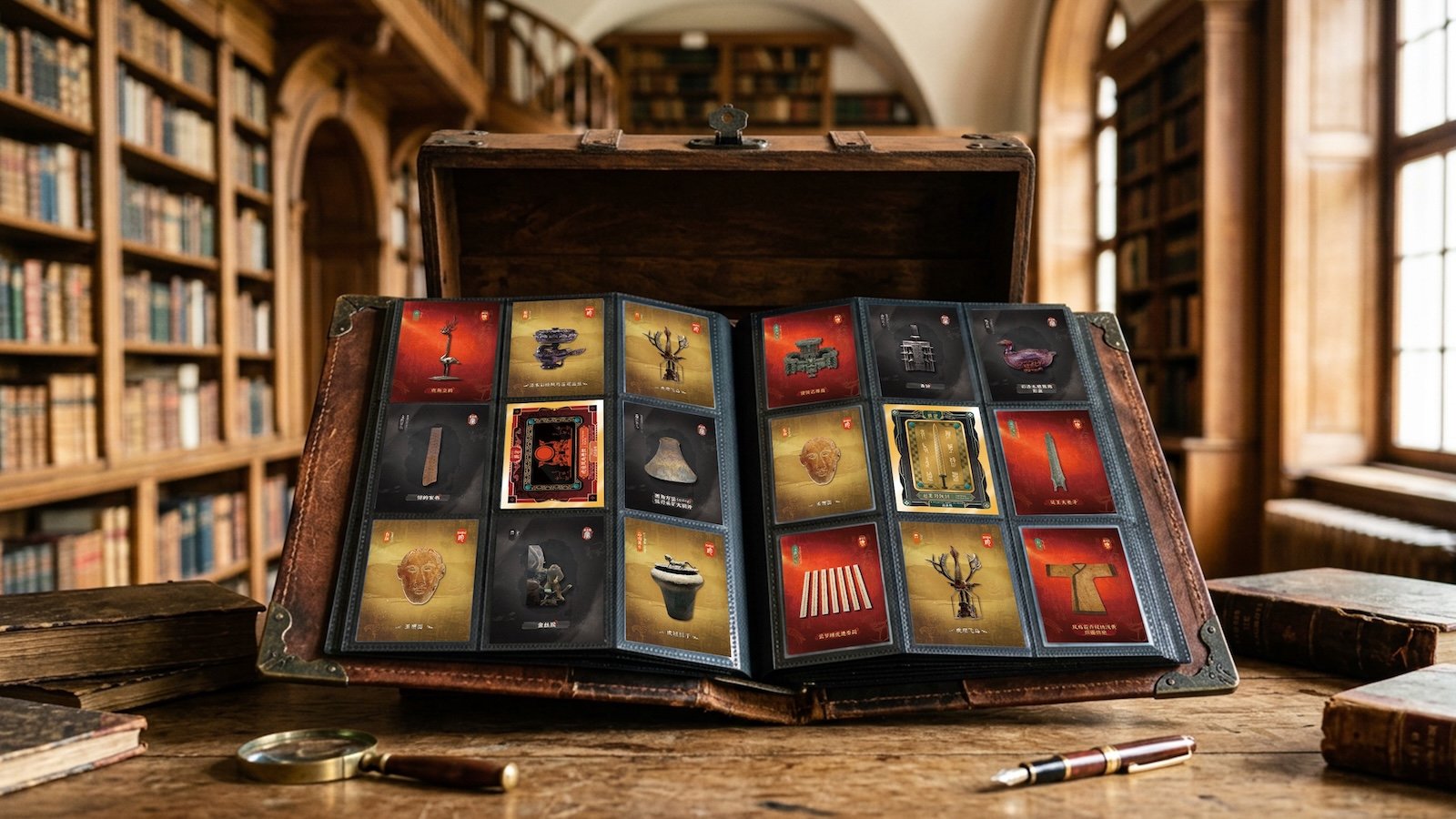
What if a personal memory—something small but meaningful—could be preserved alongside human history? That’s the idea behind the MarkYin Artifact AI Card, an NFC-enabled collectible that links your personal story to a real museum artifact inside a growing global digital archive.
Instead of saving memories on scattered hard drives, social media timelines, or cloud folders that may disappear over time, MarkYin proposes something more intentional: an artifact archive where your story becomes part of a cultural record.
Tap the card, upload your memory, and it becomes linked to a real historical artifact inside MarkYin’s Civilization Archive.
The concept sits somewhere between a collectible object, a digital time capsule, and a cultural project designed to preserve both artifacts—and the people who interacted with them.

A collectible card connected to real museum artifacts
At first glance, the MarkYin card looks like a collectible artifact card. But embedded inside is an NFC chip that connects to a digital archive entry tied to a real museum object.
Each card corresponds to one specific artifact record inside the MarkYin archive. Once activated, owners can store memories such as:
- Text messages
- Photos
- Video clips
- Voice recordings
These are stored securely in the archive—not on the card itself—so tapping the card simply retrieves the record.
Tap the card with a phone and your archived memory replays alongside the artifact’s history.
The result is a strange but compelling mix of personal storytelling and cultural preservation.
A limited collectible with no reprints
MarkYin isn’t just selling a digital archive—it’s also creating a collectible series.
Season One includes 56 artifacts inspired by the ancient State of Chu in China, a civilization that existed around 2,000 years ago.
Each card is:
- Individually numbered
- Linked to a single artifact record
- Part of a limited global release
- Never reprinted
Some rare editions are handcrafted using precious materials like gold and turquoise, produced by master artisans over a period exceeding 300 days.
The rarity tiers include:
- Jueshi – ultra-rare artisan cards
- Gui
- Zhen
- Bao
- Chen
While rarity affects the craftsmanship and materials used, every card still grants the same archival ability: the power to store a personal memory linked to an artifact.

Your memory becomes part of a civilization archive
The bigger vision behind MarkYin is something called the Civilization Archive.
The project aggregates artifact data from 300+ museums worldwide, with plans to expand to 100,000+ cultural items by 2026.
Over time, the archive aims to include:
- Museum artifacts
- Ancient architecture
- Heritage sites
- Intangible cultural heritage
MarkYin uses AI tools to structure and guide this information so users can explore the stories behind historical objects.
The card effectively acts as your key to the archive—and your opportunity to leave a small imprint within it.
Add new chapters every 1000 days
MarkYin owners aren’t limited to a single entry.
Every 1000 days, the archive opens again for that card’s owner, allowing them to add a new “chapter” to their artifact record.
This could be:
- A message to a loved one
- A life update
- A milestone memory
- A recorded voice note for future generations
Each entry generates a digital Entry Certificate, which can be verified through the Civilization Archive platform and shared online.
Think of it as a personal timeline attached to a historical object.
A gift designed to last longer than typical tech
Most tech gifts lose relevance quickly. A new gadget feels exciting today but becomes outdated next year.
MarkYin approaches gifting from a completely different direction.
You can store a message or memory inside the archive and gift the card to someone you love. When they tap it, they see the artifact—and your message preserved with it.
It becomes part keepsake, part legacy object.
For couples, families, or close friends, the idea is simple: tie your memory to something that already survived centuries.
AI-powered museum guides
Each artifact in the archive comes with its own AI museum guide.
Rather than a generic chatbot, MarkYin’s system focuses specifically on artifact knowledge. The AI draws from the Civilization Archive database to explain:
- The artifact’s origin
- Cultural significance
- Historical context
- Related discoveries
Currently, the system supports 40 languages, with plans to expand further.
This turns the card into something educational as well—an entry point into deeper cultural storytelling.
Every card owner becomes part of a private community known as the Civilization Archive Stewards’ Lodge.
Members can:
- Connect with other owners of the same artifact card
- Join online cultural salons
- Participate in occasional real-world meetups
- Visit the museum that houses their artifact
The idea is to transform ownership from a passive collectible into a shared cultural experience.
Instead of simply owning a card, you become a steward of a historical record.
Built with museum collaboration
MarkYin’s early collaborations include partnerships with official cultural institutions, including the Jingzhou Museum, a National First-Class Museum in China.
The project has also appeared at global technology events like:
- World Artificial Intelligence Conference (WAIC)
- World Expo 2025
A team of university professors contributes to curating artifact knowledge and ensuring historical accuracy within the platform.
Product specs
- Card size: 63 × 88 mm
- Technology: Built-in NFC chip
- Packaging: Blind-box format (1 card per box)
- Compatibility: iOS and Android mobile app
- Edition: Individually numbered artifact cards
A different way to leave something behind
Most people will never have their name written in a museum catalog.
MarkYin doesn’t promise fame or historical recognition—but it offers something quieter and more personal.
A place where an ordinary moment can sit beside an extraordinary artifact.
Tap the card, save a memory, and it becomes part of a growing archive designed to last longer than typical digital platforms.
In a world where photos disappear into endless camera rolls and posts vanish in algorithm feeds, MarkYin asks a simple question:
What if one memory could stay forever?
