

The initiative highlights Ghana’s commitment to strengthening the media’s role in supporting a knowledge-driven economy, where accurate and impactful reporting can drive awareness, adoption, and policy engagement around science and technology.
Ghana is stepping up efforts to improve science and technology reporting through targeted media capacity development, as part of a broader push to strengthen public understanding of innovation and research.
The Ministry of Communication, Digital Technology and Innovations, in collaboration with partners including UK in Ghana and UK in Nigeria, supported the 2026 Capacity Building for Media Excellence in Science, Technology and Innovation (STI) Reporting programme. The initiative is designed to equip journalists with the knowledge and skills required to accurately cover developments in science and technology.
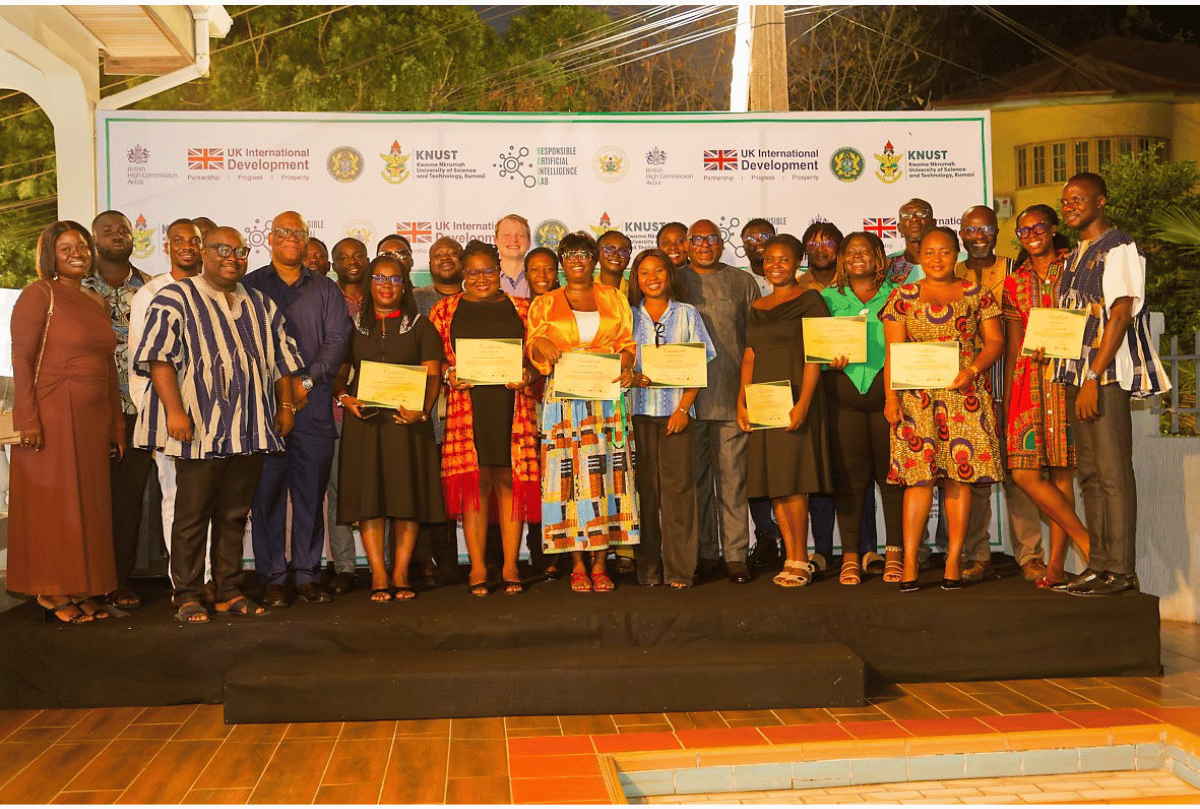
The one-week training programme, held in Accra, brought together 24 journalists from across the country. It was organised in partnership with Kwame Nkrumah University of Science and Technology (KNUST), the Responsible Artificial Intelligence Laboratory, the British High Commission, and UK International Development.
Participants engaged with scientists, researchers, and innovation experts, gaining practical insights into how to effectively communicate complex scientific ideas and technological advancements to the public. The programme forms part of a national effort to ensure that innovation is not only developed but also properly understood and applied to improve everyday lives.
At the end of the training, ten journalists were selected for an advanced, second-phase programme at Imperial College London, where they will further build their expertise in science, technology, and innovation reporting within an international context.
The initiative highlights Ghana’s commitment to strengthening the media’s role in supporting a knowledge-driven economy, where accurate and impactful reporting can drive awareness, adoption, and policy engagement around science and technology.
