

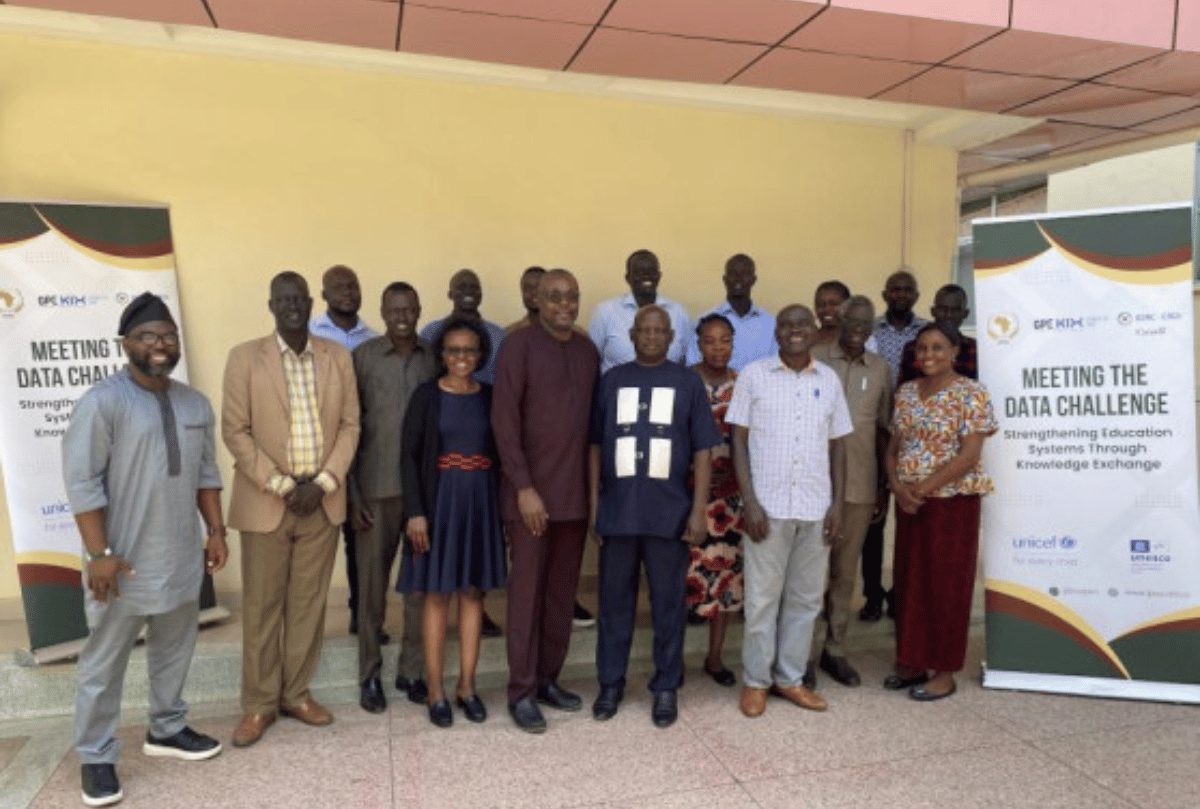
The initiative represents an important step in South Sudan’s transition toward a more robust, data-driven education system.
The African Union Pan-African Institute for Education for Development (AU IPED), in partnership with the Global Partnership for Education Knowledge and Innovation Exchange (GPE KIX) Africa 19 Hub and Canada’s International Development Research Centre (IDRC), has successfully concluded a three-day workshop in Juba aimed at strengthening South Sudan’s Education Management Information System (EMIS).
The workshop was organized in collaboration with the Ministry of General Education and Instruction and brought together senior government officials and technical experts from key departments, including EMIS, Planning and Budgeting, ICT, and Policy. The engagement focused on improving coordination across data-producing and data-using units within the education sector, with the goal of advancing evidence-based decision-making and strengthening national education systems.
The initiative supports broader global and continental education goals, including Sustainable Development Goal 4 (SDG 4) and the Continental Education Strategy for Africa (CESA 2026–2035), which emphasize the importance of reliable data systems for tracking progress and improving learning outcomes.
The workshop was officially opened by AU IPED leadership, alongside senior representatives from the Ministry and GPE KIX. Speakers highlighted the importance of strong and well-governed data systems in enabling effective planning, resource allocation, and improved education delivery across the country.
During the sessions, participants conducted technical consultations and system mapping exercises to examine how education data is collected, processed, and reported across different levels. Findings revealed that South Sudan’s EMIS is largely fragmented, with heavy reliance on manual, paper-based systems and limited integration between existing data platforms. These challenges have contributed to inconsistencies in key education indicators, duplication of reporting processes, and delays in data availability for decision-making.
To deepen understanding of these challenges, the AU IPED team conducted field visits to public schools in Juba. The visits confirmed the reliance on manual data collection methods and highlighted the operational burden on school staff, while also showcasing the commitment of educators working under constrained conditions.
The workshop identified several key challenges affecting the effectiveness of EMIS, including fragmented data systems, limited technical capacity, inadequate ICT infrastructure, weak coordination among stakeholders, and low levels of domestic financing for education data systems. These issues have limited the efficiency, accuracy, and sustainability of data-driven planning in the education sector.
In response, participants developed a set of priority recommendations to guide future reforms. These include strengthening data governance frameworks, standardizing data collection tools, improving coordination among partners, building technical capacity at all levels, and investing in ICT infrastructure and system integration.
A key outcome of the engagement was the development of a costed national EMIS action plan. The plan outlines a structured roadmap for strengthening the education data system, with priority investments in capacity development, data quality improvement, infrastructure, governance, and decentralization. By linking reforms to clear budgetary requirements, the plan is designed to support implementation, resource mobilization, and long-term system sustainability.
The initiative represents an important step in South Sudan’s transition toward a more robust, data-driven education system. It reinforces ongoing efforts to improve planning, enhance accountability, and ensure that education policies are informed by accurate and timely data, in alignment with national priorities and international development frameworks.
