
Berkeley Lab: DL4SCI 2026 to Spotlight Discovery Through Agentic AI, Foundation Models
March 31, 2026 — Bringing researchers to the state of the art is crucial to the use of AI for science research, and this summer, that’s exactly what the National Energy Research Scientific Computing Center (NERSC), Lawrence Berkeley National Laboratory (Berkeley Lab), and collaborating institutions are doing.
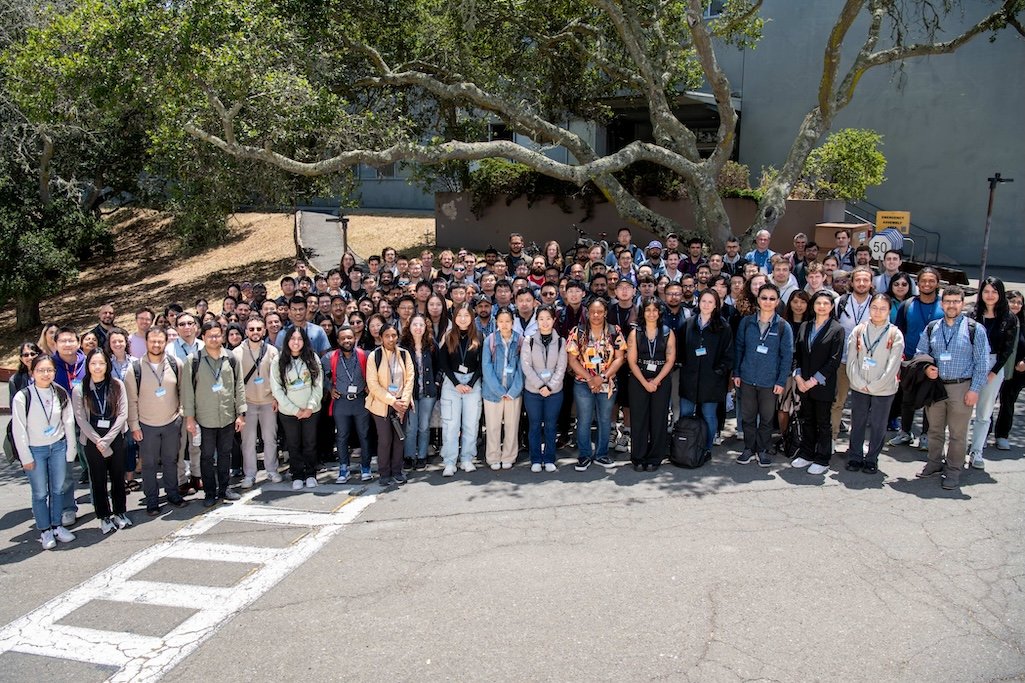
Deep Learning for Science School 2025
They’ll host the 2026 Deep Learning for Science (DL4SCI) Summer School, a five-day intensive program assembling researchers and engineers to explore the latest advances in deep learning and AI. Hosted at Berkeley Lab from July 20–24, the 2026 iteration will emphasize foundation models, reasoning, and agentic AI for scientific discovery. The deadline to apply is April 10.
“Since we started this event in 2019, we’ve seen an explosion in the sophistication of deep learning and AI approaches used in science,” said Wahid Bhimji, Division Deputy for AI and Science at NERSC and a co-organizer of the event. “It remains our focus to bring bleeding-edge techniques from practitioners in industry, academia, and labs to the wider fundamental science community.”
Built around in-depth lectures, research talks, and hands-on tutorials teaching emerging approaches to foundation models for science, the program will span the end-to-end lifecycle – data, training at scale, adaptation, and evaluation – along with sessions on reasoning-centric workflows and agentic systems. Students can expect a blend of theory, practical application, and networking opportunities to bolster their understanding and prepare to bring what they’ve learned into their work.
It’s this range of learning experiences that makes DL4SCI a valuable tool for developing an AI-conversant workforce, according to organizers. And because the program is tailored to issues and skills at the forefront of AI as it evolves, each iteration offers unique opportunities.
“DL4SCI is a week packed with insights, hands-on learning, and opportunities to connect with peers and experts, with lectures, talks, and tutorials from experts at the forefront of AI,” said Ben Erichson, a researcher in the Berkeley Lab Scientific Data Division and a co-organizer of the event.
But summer school isn’t just about gaining knowledge; it’s also about people. Summer School will also facilitate networking and collaboration through breakout sessions, group activities, and optional poster sessions. These forums will allow participants to engage directly with instructors and peers, fostering vibrant discussions on how current research trends—particularly in foundation models, reasoning, and agents—can be leveraged in scientific domains. By the end of the program, attendees will be equipped with the tools and expertise necessary to implement, evaluate, and scale modern AI solutions in their research.
“I love meeting participants who are applying AI to so many exciting science problems,” he said. “So I can’t wait for this year’s event!”
About Computing Sciences at Berkeley Lab
High performance computing plays a critical role in scientific discovery. Researchers increasingly rely on advances in computer science, mathematics, computational science, data science, and large-scale computing and networking to increase our understanding of ourselves, our planet, and our universe. Berkeley Lab’s Computing Sciences Area researches, develops, and deploys new foundations, tools, and technologies to meet these needs and to advance research across a broad range of scientific disciplines.
Source: Elizabeth Ball, Berkeley Lab
Related

