

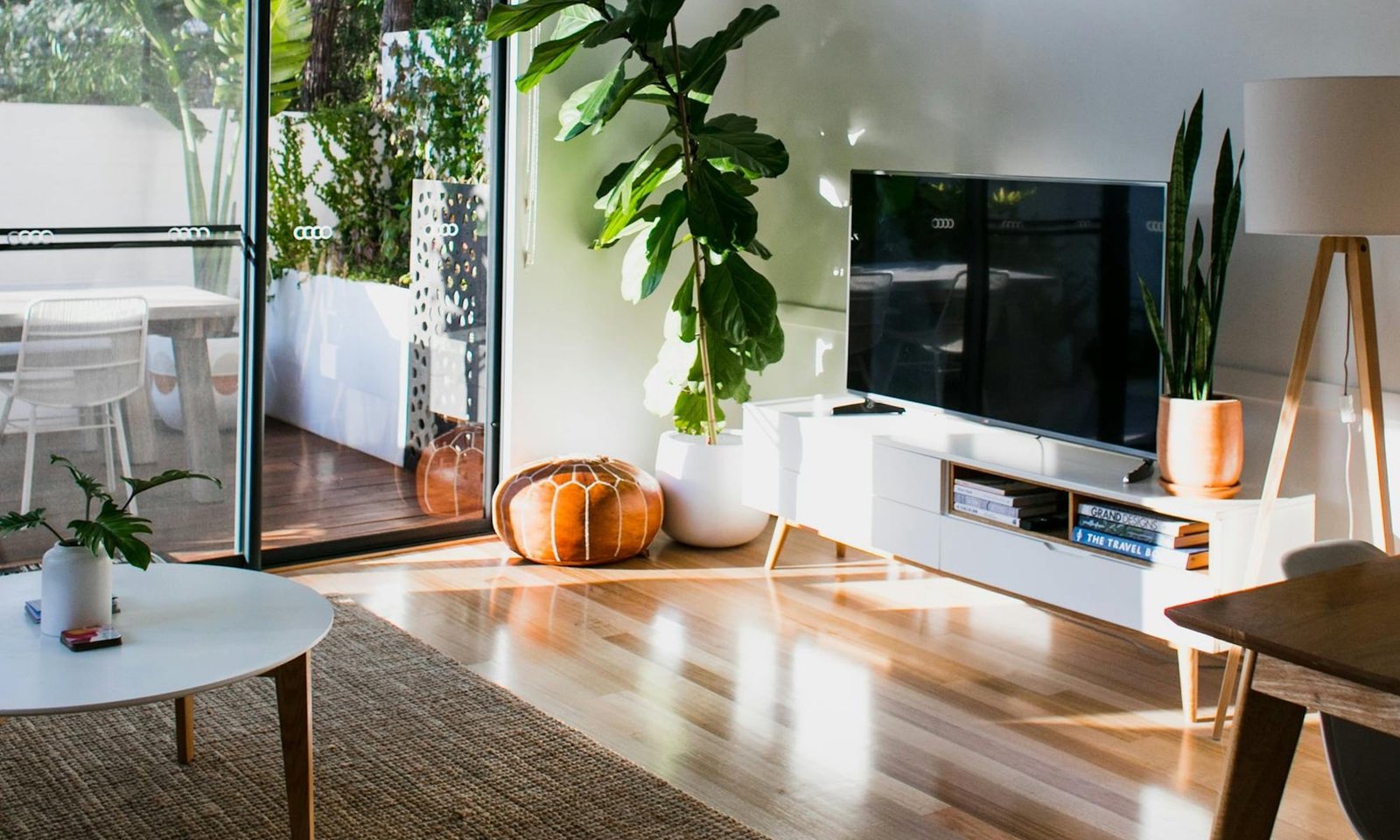
I recently found myself in my living room at 2:00 PM, squinting at a dark scene while the afternoon sun turned my expensive television into a very high-end mirror. It’s the classic bright living room dilemma. And, for years, the advice was simple: if you have a bright living room, buy an LED; if you have a man cave, go for an OLED. But times (and tech) have changed, bringing the OLED vs. Mini-LED for bright rooms debate the attention it deserves.
Yes, as we settle into 2026, OLEDs have finally found their “sunscreen” through tandem panels and specialized coatings. Meanwhile, Mini-LEDs have gained enough dimming zones to almost—almost—convince you they aren’t using a backlight. You shouldn’t have to choose between a screen that washes out in the sun and one that blooms in the dark. But, with the current limits of display physics, you do.
The Trade-Off Explained: Thermal Ceilings vs. Zone Control
At its core, this whole debate comes down to one thing: how your TV handles light—both the light it produces and the light already in your room.
OLED (Organic Light Emitting Diode) is what’s called self-emissive. That means that every single pixel (all 8+ million of them) is its own light bulb. When something on screen is black, those pixels just turn off completely. That’s how you get those deep, inky blacks OLED TVs are known for.
The catch? Those pixels are organic, which means they can only get so bright before heat becomes an issue. Push them too hard for too long, and you risk burn-in wear over time.
Even with 2026’s new Primary RGB Tandem 2.0 panels—which stack light-emitting layers to increase efficiency—OLEDs still have to play a defensive game. According to early 2026 technical deep dives from TFTCentral, these new panels can briefly hit 4,500 nits, but their sustained brightness over the whole screen is still lower than high-end LEDs (TFTCentral, 2026).
Mini-LED, meanwhile, takes a different approach. Instead of individual pixels lighting themselves, it uses thousands of tiny LEDs behind the screen to blast light through it. And since those LEDs aren’t organic, they can get really bright without the same long-term concerns (NotebookCheck 2025).
So, here’s the trade-off in simple terms:
- OLED: Cleaner image, perfect blacks, zero blooming—but relies on coatings and clever tech to fight glare
- Mini-LED: Serious brightness that powers through sunlight—but uses dimming zones, which can sometimes create subtle halos or shifts
When OLED Actually Makes More Sense (Yes, Even in a Bright Room)
I know—OLED doesn’t sound like the obvious choice here. But it can be, depending on your setup.
If your main issue is reflections (like a window directly across from your TV), a high-end OLED with a good anti-glare finish can make a huge difference. Instead of bouncing light back at you, it diffuses it, which helps cut down that mirror effect.
There’s also the viewing angle factor. If your seating isn’t perfectly centered—or you’ve got people spread out across a big couch—OLED holds its color and contrast way better from the side (TechRadar, 2025).
Go OLED if:
- Reflections are your biggest annoyance
- You watch from different angles around the room
- You care more about image quality than brightness
Best for: The Reflection War
If you have a sectional sofa where people sit at wide angles and a lamp that always reflects in the corner of the screen, go OLED. OLED maintains color accuracy from any angle, whereas most Mini-LEDs still suffer from “gamma shift” (the colors look washed out) when viewed from the side.
The Product Pick
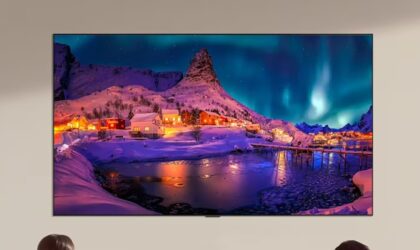
LG G6 OLED 2026
Powered by LG’s Alpha 11 AI Processor Gen 3, this TV gets impressively bright—reaching up to 4,500 nits for highlights—while its “Reflection Free Premium” coating keeps glare to a minimum. In simple terms, you get a bright, vivid picture without that annoying mirror effect during the day. It’s a great pick if you want that premium, cinematic OLED look but need something that can still handle a bright living room without driving you crazy.
When to Prioritize Mini-LED: The Daylight Titan
Now, if your living room feels like a greenhouse—floor-to-ceiling windows and white walls—OLED will eventually hit its limit. This is where Mini-LED quite literally shines, taking the OLED vs Mini-LED for a bright room debate to a different level.
Because, in a truly sun-drenched room, your eyes adapt anyway. When this happens, you lose the physical ability to see the OLED’S perfect blacks. Instead, you’re noticing whether the image looks vivid enough to compete with the room.
And that’s where Mini-LED wins. It just has more raw power. It’s also a great pick if you watch a lot of daytime content—sports, news, or gaming with bright static elements—since you don’t have to think about long-term wear in the same way.
Go Mini-LED if:
- Your room gets very bright and you can’t control the light
- You watch a lot during the day
- You want consistently punchy, vibrant visuals no matter what
Best for: The Daytime Power-User
If you watch a lot of sports, morning news, or play games with bright, static HUDs (like Fortnite or Call of Duty), Mini-LED is your champion. You get the peace of mind that there is zero risk of burn-in, and the image will remain thick and vibrant even with the curtains wide open.
The Product Pick:
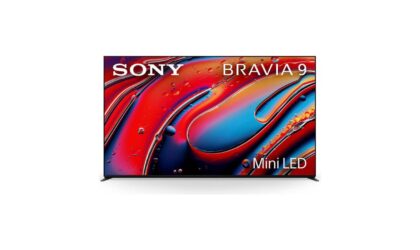
Sony BRAVIA 9 K75XR90
The Sony BRAVIA 9 (K-XR90) is still one of the best TVs you can get for a bright room. It uses Sony’s XR Backlight Master Drive to control thousands of Mini-LEDs with impressive precision. You get a super bright picture without losing too much detail in darker scenes. With peak brightness reaching over 2,800 nits—even in accurate picture modes—it has no problem holding onto rich color and contrast, even when your room is filled with sunlight. It’s a great choice if your space is consistently bright and you want a TV that stays punchy and vibrant no matter the time of day.
The Verdict (My Honest Take)
If I had to simplify OLED vs Mini-LED for a bright room, I’d say it really comes down to the type of light in your room.
If your space is bright but somewhat manageable—maybe you’ve got blinds or curtains—I’d recommend OLED. The image just looks cleaner and more cinematic, and modern models handle reflections way better than they used to.
But if your room is bright all the time—like floor-to-ceiling windows, skylights, or full-on sun exposure—Mini-LED is the safer bet. At a certain point, brightness just wins, and Mini-LED has more of it to give.
Lauren has been writing and editing since 2008. She loves working with text and helping writers find their voice. When she’s not typing away at her computer, she cooks and travels with her husband and two kids.
