

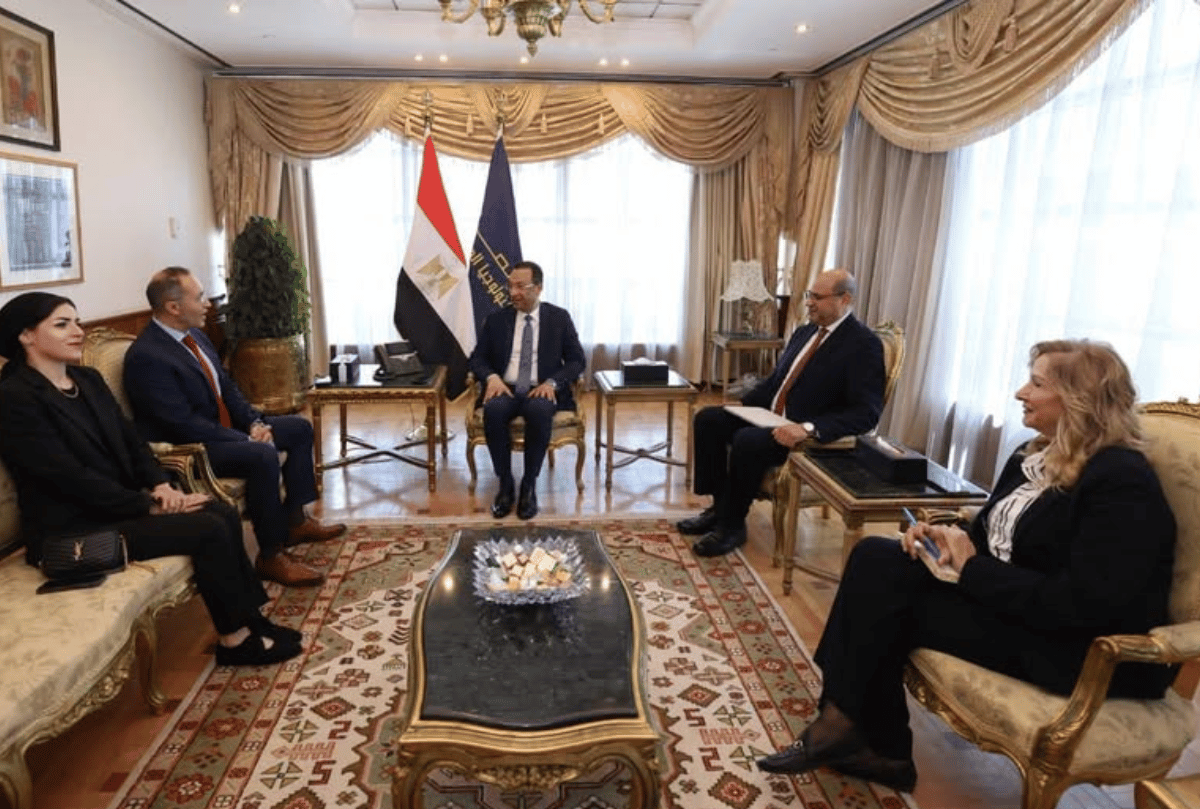
Discussions emphasized joint efforts to accelerate Egypt’s digital transformation agenda, particularly through skills development, advanced infrastructure deployment, and enhanced cybersecurity frameworks.
Ministry of Communications and Information Technology (Egypt) has held high-level discussions with Intel Corporation ’s Middle East and Africa leadership to strengthen cooperation in digital infrastructure, artificial intelligence, cybersecurity, and capacity building.
The meeting brought together ICT Minister Raafat Hendy and Intel’s General Manager for the Middle East and Africa, Taha Khalifa, and focused on expanding collaboration in key technology areas. Discussions emphasized joint efforts to accelerate Egypt’s digital transformation agenda, particularly through skills development, advanced infrastructure deployment, and enhanced cybersecurity frameworks.
Minister Hendy highlighted that the ministry is actively advancing artificial intelligence capabilities as part of its broader national digital strategy. He noted that building a strong base of qualified professionals is central to expanding AI adoption across government services, supporting Egypt’s vision of a connected digital society that delivers more efficient and technology-driven public services.
He also reaffirmed the government’s commitment to working with leading global technology firms to implement the Second Edition of Egypt’s National AI Strategy. According to the minister, strengthening cybersecurity, developing national talent, and fostering innovation remain key pillars of the country’s ongoing digital transformation efforts.
On the other side, Intel’s Taha Khalifa expressed the company’s readiness to deepen cooperation with Egypt in digital skills development. He stated that Intel aims to support capacity building through specialized training programs focused on artificial intelligence, cybersecurity, and advanced infrastructure technologies.
The discussions also reviewed ongoing initiatives by the ministry’s Applied Innovation Center (AIC), including the development of generative AI applications tailored to societal needs. One key project highlighted was “Karnak,” an Egyptian large language model designed with Arabic cultural and national identity considerations. The meeting also underscored collaboration between AIC and universities to advance research and development in emerging technologies, particularly AI.
Both sides agreed to work toward a memorandum of understanding (MoU) to formalize and expand cooperation. The proposed agreement will include training programs for government employees and senior officials, as well as support for initiatives such as Digilians, aimed at strengthening Egypt’s digital talent ecosystem.
The talks also explored plans for technical workshops and knowledge-sharing sessions on global trends in artificial intelligence and cybersecurity, leveraging Intel’s technical expertise. The meeting was attended by senior officials from the ministry and Intel, including advisors and business development leaders involved in regional technology initiatives.
