

A conversation in a foreign language can go sideways fast. You start wondering whether your translation device can keep up and if it will work in a noisy hotel lobby. Basically, you question whether wearing tech on your face — in this situation — is really worth the hassle. That’s where this iFLYTEK AI Glasses review comes in. These cool new glasses were at the BEYOND Expo in Macao, May 27-May 29
AI-powered smart glasses are super interesting right now. They’re not just another expensive tech gadget. They rely on cutting-edge tech to solve in real-world problems. Like communicating with your international client, who speaks a different language. Understanding how those pieces fit together can help you figure out whether this kind of wearable actually makes sense for your daily routine or professional workflow.
In this article, we’re breaking down the technical architecture behind the iFLYTEK AI Glasses — a smart wearable that’s ideal for multinational business professionals, corporate managers, and senior office workers — so you can get a clearer picture of where it fits and if it makes sense for you.
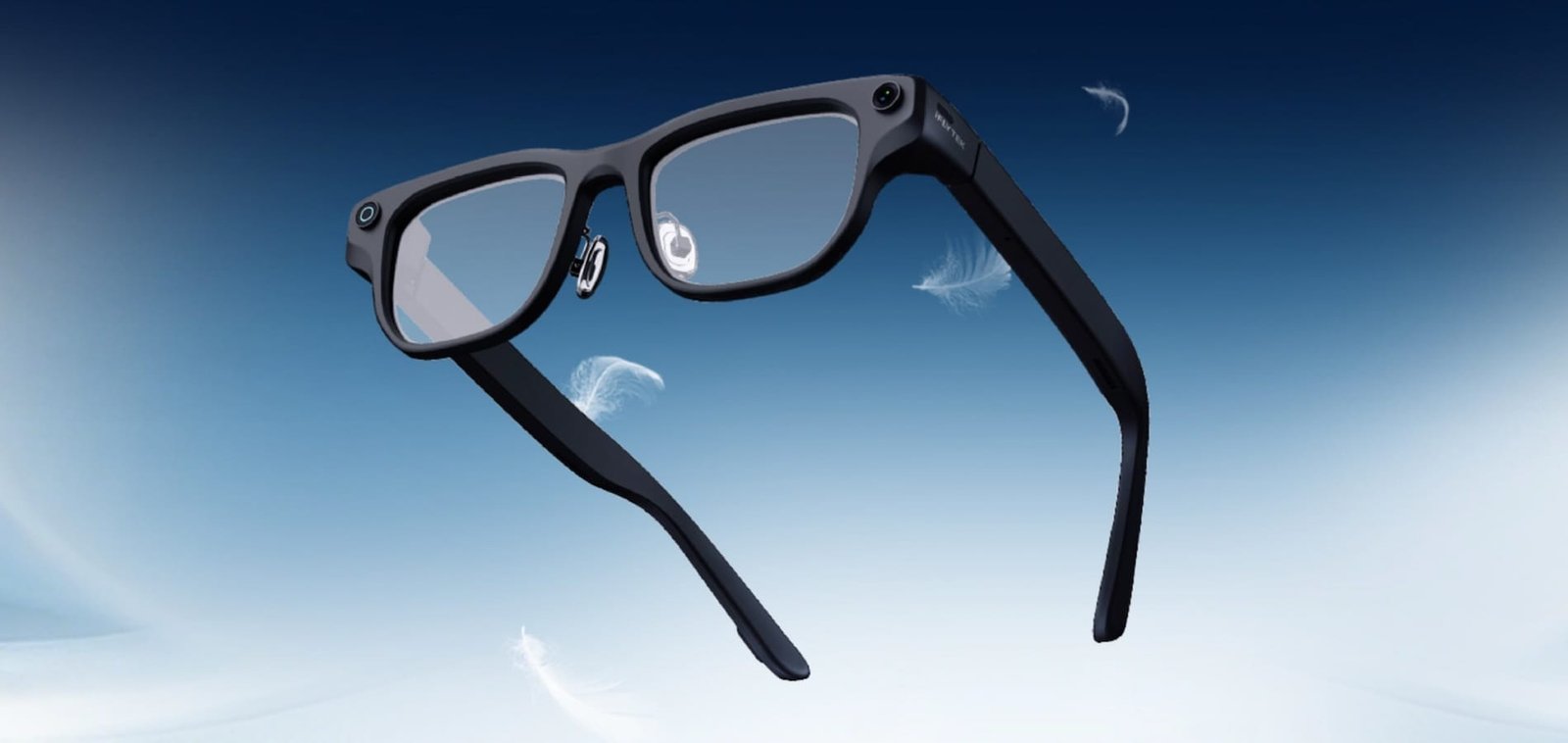
Frame and Optics: A 40-gram chassis built around a waveguide display
When you’re thinking about AI glasses for everyday use, one of the first things that comes up is how all that tech is actually packed into something that still feels like normal eyewear.
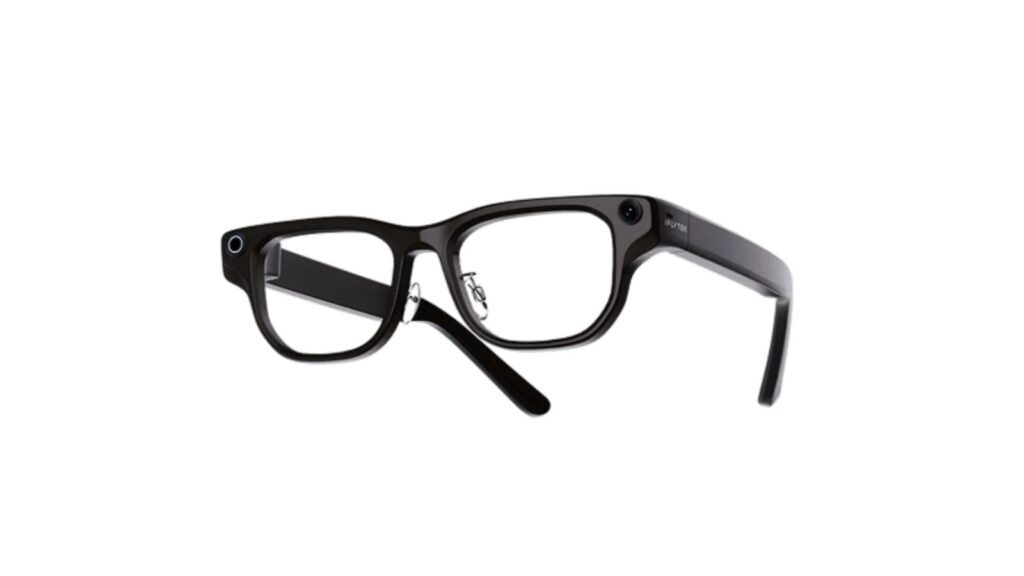
The iFLYTEK AI Glasses come in at around 40 grams, which the company says is about 20% lighter than similar AI+AR glasses. That weight savings comes down to a careful mix of materials: an aviation-grade magnesium-aluminum alloy front frame, ultra-light nylon temples, and a tiny 0.7g hinge that’s rated for up to 20,000 folds.
The lenses use what iFLYTEK calls a fully laminated resin waveguide display. Each lens weighs just 2.6g and is only 1.2mm thick. That helps keep the overall look much closer to regular glasses than bulkier AR headsets. Even the temple arms taper from 12.5mm down to 5.3mm. They play a big role in keeping the design visually low-profile.
The goal is to give you comfort over long sessions. iFLYTEK reports testing with 500+ users for 8+ hours of pressure-free wear. That means it’s not just for tech demos — it’s actually designed for long wear.
Display Engine: Micro LED and sunlight visibility
This is where things start to feel properly “next-gen.”
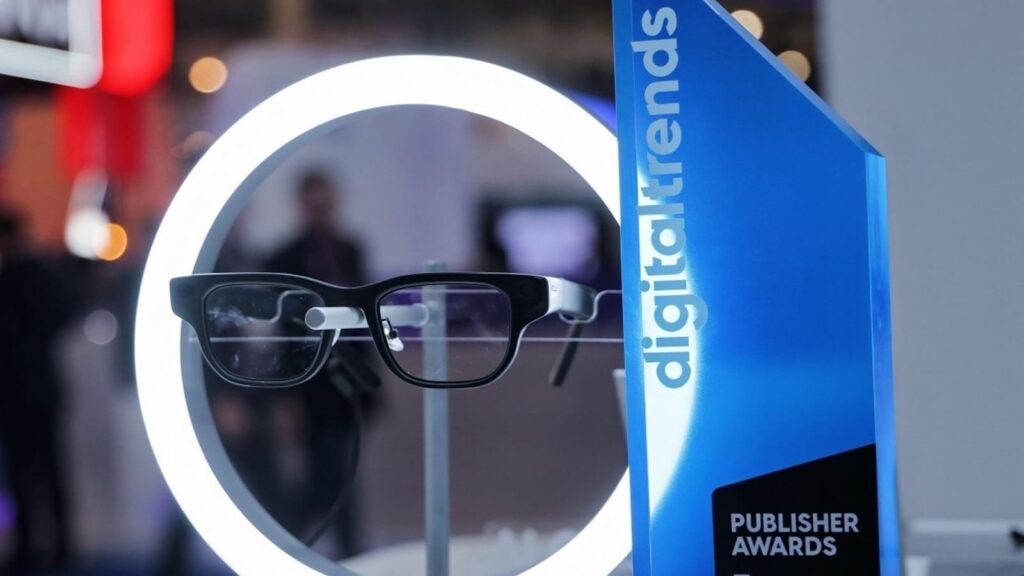
Shrinking a usable display into something that fits inside glasses is a serious engineering challenge. The iFLYTEK AI Glasses use a Micro LED optical engine with a 4μm pixel size and a total volume of just 0.15cc — basically the size of a corn kernal — paired with a peak brightness of up to 1 million nits.
That brightness ensures the display is readable outdoors, especially in harsh sunlight where weaker systems basically wash out completely. If the waveguide can’t push enough light through the lenses, the whole AR overlay becomes useless the moment you step outside.
That said, there are real limits here too. Waveguide-based displays in this category typically don’t offer a wide field of view like full AR headsets. Instead, the experience is built around quick, glanceable info — things like live translations, captions, or navigation prompts — rather than fully immersive visuals.
Microphone Array and Noise Reduction: Where translation quality actually begins
Audio can make or breaks the whole AI glasses experience.
The iFLYTEK AI Glasses use a 5+1 microphone array setup. It includes five air-conduction mics plus one bone-conduction mic — with a pickup range of up to 8 meters. The bone-conduction element helps capture your voice through skull vibrations, which makes it more resistant to background noise.
But the hardware is only part of the story. The system also uses lip-motion recognition to improve noise filtering. In simple terms, the glasses track lip movement through the camera to figure out who you’re actually listening to, and then suppress surrounding voices. That’s what helps keep the translation pipeline focused on the right speaker.
The different use modes take this further. The Simultaneous Interpretation mode uses both omnidirectional and directional pickup. Meanwhile Face-to-Face Translation isolates the voice of the person in front of you. Finally, Call Mode leans more heavily on bone conduction. There are also tuned profiles for environments like offices, outdoors, or even subways.
Translation Architecture: Online, offline, and AR modes
This is where things get more software-heavy.
The glasses run on iFLYTEK’s end-to-end speech simultaneous interpretation model, with Chinese-to-English response times as fast as around 2 seconds. On top of that, you get multiple modes: simultaneous interpretation, face-to-face translation, online interpretation, call translation, photo translation, and AR translation.
Most of the heavy lifting happens in the cloud, which means performance depends a lot on connectivity. But the device also includes offline support for 18 language pairs — 13 Chinese-to-foreign and 5 English-to-foreign — so you still get basic functionality when you’re off the grid.
In practice, that creates a clear trade-off: online mode gives you full capability, but offline mode keeps you functional when the signal isn’t reliable.
The AI Assistant Layer: A voice-triggered agent across devices
Beyond translation, there’s a deeper assistant layer built in.
You activate it by saying “Xiao Fei, Xiao Fei,” and it runs on iFLYTEK’s speech recognition and multimodal AI system. It can answer questions based on what the camera sees. So it can describe a building in front of you — and it also connects to a broader ecosystem for things like navigation, payments, and task handling.
It all works via iFLYTEK’s AstronClaw cloud model and the Loomy desktop assistant, which is where things start to feel more like an agent system than a simple voice assistant. For example, you could say something like, “summarize the meeting and email it to everyone,” and the workflow gets split across devices: the glasses capture the input, the cloud structures it, and the desktop system handles the actual email output.
What makes this different from typical voice assistants is the visual context. The glasses aren’t just hearing you — they also see what you see, which changes how complex requests can be handled.
Multimodal Recording: Meeting minutes as a hardware feature
This is one of the more practical use cases.
Instead of juggling note-taking while trying to follow a conversation, the glasses handle everything in parallel. They combine real-time audio transcription, 12MP wide-angle image capture, and translated text when needed. That means whiteboards, slides, and handwritten notes can all be captured automatically and tied into the transcript.
The result is a single, structured document that blends text, images, and key highlights — essentially automated meeting minutes.
Because the glasses are worn instead of placed on a table, they also capture your actual point of view, which makes the recording feel more natural and less static compared to a fixed camera or voice recorder.
Software Stack and App Ecosystem
Under the hood, the system runs across three layers.
The glasses themselves handle perception — microphones, camera, speaker, sensors, and the display. The companion app manages connection, device settings, data transfer, scheduling, and account management. Then the cloud layer takes care of the heavy AI work, including translation, multimodal understanding, real-time processing, and personalized assistant functions.
The device also comes with bundled software benefits, including access to the iFLYTEK Translation App, plus up to 750 hours per month of simultaneous interpretation and another 750 hours of immersive translation, with support across mainstream devices.
Conclusion
At the end of the day, choosing AI glasses like these really comes down to how you work and how often you deal with multilingual situations.
If your work revolves around international meetings, travel, or constant language switching, the appeal is pretty clear: you get translation, recording, and an AI assistant all built into something you just wear. It acts less like a separate gadget and more like an always-on tool that helps you throughout the day.
