

Blue Swan AI Gigafactory: Can Europe Scale AI Sustainably?
In his presentation at the TPC26, Dieter Kranzlmüller, Chairman of the Board of the Leibniz Supercomputing Centre (LRZ) and Professor of Computer Science at LMU Munich, talked about his vision for the Blue Swan AI Gigafactory and the role it could play in Europe’s AI future.
Europe’s interest in AI Gigafactories stems from a belief that current AI infrastructure will not be sufficient to support future AI workloads in science and industry. While Kranzlmüller agrees that Europe needs more AI computing capacity and that AI Gigafactories are worth pursuing, he raises a broader question: Should Europe simply build the biggest possible GPU clusters? Is there a more sustainable path?
 “What I’m always questioning, and I have no answer to that is: What about sustainability? If we are spending $500 billion now, does it mean in five years we have to spend the same amount of money because we have to throw away all the old GPUs? That’s a question which comes up. And I believe actually it’s not that size that we need.”
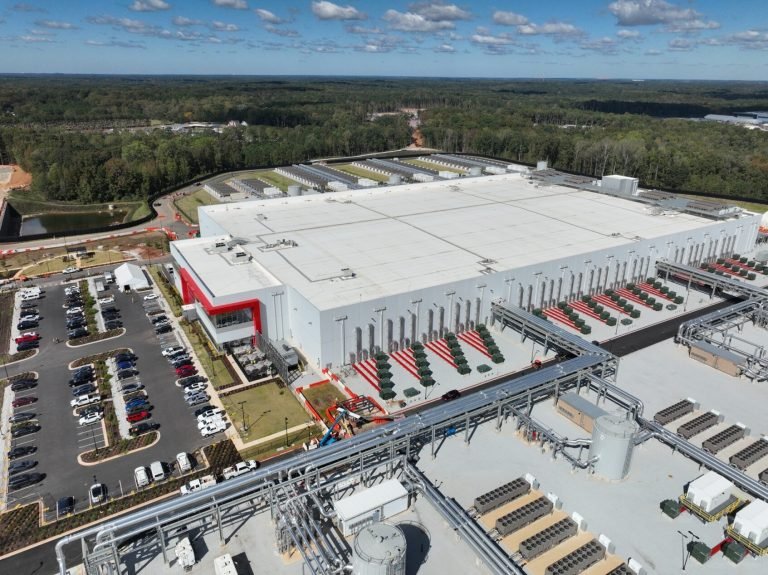
Kranzlmüller’s concerns stem from the scale of AI infrastructure projects now being proposed and executed around the globe. He pointed to Project Stargate in the U.S., which is linked to nearly half a trillion dollars of capital and data centers consuming hundreds of megawatts of power. That is a massive scale. Is it sustainable? Kranzlmüller acknowledged the importance of expanding AI computing capacity, but he questioned whether simply building larger facilities is the answer.
According to Kranzlmüller, Europe should leverage decades of experience operating HPC systems. Energy efficiency, cooling technologies and long-term utilization must be considered alongside raw compute capacity. “I don’t think it’s optional,” he said of sustainability. “I think it must be a priority.”

(FOTOGRIN/Shutterstock)
The hardware alone will not create value, according to Kranzlmüller. But when combined with a surrounding ecosystem of tools, services and domain expertise, it becomes significantly more useful than a standalone GPU deployment.
A key differentiator of the proposal is its emphasis on science as well as industry. Currently, Gigafactories are envisioned by the European Commission as being driven by private sector capital. However, Kranzlmüller is of the opinion that research institutions should play a bigger role.
“Whatever we put in this, the only group today on the planet that can use all these GPUs here in Europe is the scientists. We can scale up these things. And I have enough friends in AI that tell me, well, if you give me 100,000 GPUs, I’ll make use of them.”
For Kranzlmüller, that is where Blue Swan begins to differ from many of the other Gigafactory proposals currently being discussed across Europe. The project is built around the idea that science should not simply be another user of the infrastructure. Instead, researchers should help shape it from the beginning.
If Europe is going to invest billions in AI infrastructure, someone has to use it. According to Kranzlmüller, scientists are among the few groups already working at the scale envisioned for these systems. Bring research institutions into the mix from day one, so that the Gigafactory can remain productive while industry gradually ramps up its own AI ambitions.
 Kranzlmüller sees AI as an opportunity for Europe to build on its strengths in HPC rather than start from scratch. The supercomputing community has spent decades wrestling with issues such as power consumption, cooling, efficiency and system utilization. In his view, those lessons are just as relevant to AI as they were to traditional HPC.
The demand for AI compute is only going to grow. Kranzlmüller acknowledged that. He is not suggesting that Europe should build fewer AI systems. Instead, he argued that Europe should build smarter ones.
Kranzlmüller, who was named one of HPCwire’s 35 HPC Legends, sees AI as an opportunity for Europe to build on its strengths in HPC rather than start from scratch.
The supercomputing community has spent decades wrestling with issues such as power consumption, cooling, efficiency and system utilization. In his view, those lessons are just as relevant to AI as they were to traditional HPC.
Related


Broadcom Announces VMware Cloud Foundation 9.1
PALO ALTO, Calif., May 5, 2026 — Broadcom Inc., a global technology leader that designs,…
NVIDIA Announces Financial Results for 1st Quarter Fiscal 2027
SANTA CLARA, Calif., May 21, 2026 — NVIDIA (NASDAQ: NVDA) has reported record revenue for…
Anthropic Unveils ‘Project Glasswing’ as Claude Mythos Targets Software Vulnerabilities
April 9, 2026 — Anthropic has announced Project Glasswing, a new initiative that brings together Amazon…

Google Unveils Gemini Enterprise Agent Platform, Expands Vertex AI into Full Agent Stack
At Google Cloud Next 2026 in Las Vegas this week, the company announced major changes…

OpenAI Shutters Sora, Shifts Business Strategy Ahead of IPO
Back in 2022, OpenAI set off a chain reaction in the tech world when it…
Cerebras Systems Announces Launch of Initial Public Offering
SUNNYVALE, Calif., May 4, 2026 — Cerebras Systems, Inc. today announced that it plans to commence…

Linux Foundation Announces OpenSharing Project to Standardize AI Asset and Data Exchange
New protocol enables secure, open sharing of Agent Skills, AI models, and data across platforms…
OpenFold Adds 11 Members to Expand Open-Source AI for Drug Discovery
The nonprofit consortium is advancing open-source foundation models and software infrastructure for biology and drug…

ANL’s Rick Stevens Puts AI Agents to the AI-for-Science Test
Have we reached a point where AI agents can reliably function as scientific collaborators? Can…
LF AI & Data Foundation Launches DocLang Specification Working Group
New specification, supported by leading LF AI & Data member organizations IBM and Red Hat,…
WEKA Reports 10x Higher AI Inference Throughput with NeuralMesh on OCI
CAMPBELL, Calif., June 9, 2026 — WEKA today announced production-scale benchmarks that show how organizations…
Nebius Chooses Kao Data’s Harlow Campus for Major AI Infrastructure Deployment
LONDON, June 9, 2026 — Kao Data, a specialist developer and operator of data centers…
