

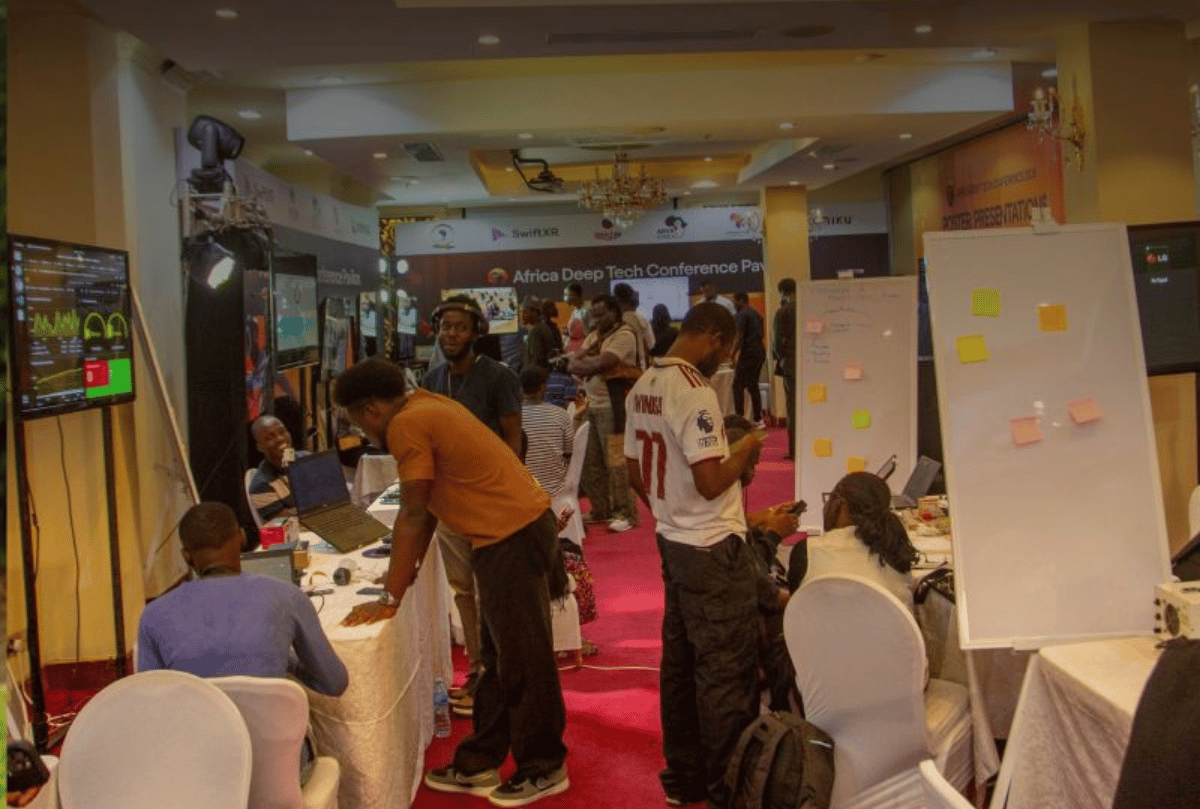
Through the 2026 Africa Deep Tech Challenge, ADTF aims to accelerate the development of locally built, resource-efficient AI technologies tailored to Africa”s realities.
The Africa Deep Tech Foundation (ADTF) has launched the 2026 Africa Deep Tech Challenge, introducing this year’s theme, “The Laptop LLM Challenge.” The competition calls on engineers, startups, researchers, and AI innovators to develop advanced large language models (LLMs) capable of running entirely offline on standard laptops equipped with just 8GB of RAM, eliminating the need for cloud connectivity.
The initiative seeks to address one of Africa’s biggest barriers to AI adoption: limited access to reliable internet, high cloud computing costs, and inconsistent electricity supply. While many of today’s AI applications depend on continuous internet access and powerful computing infrastructure, ADTF is challenging participants to create practical AI solutions that can function effectively on existing hardware, making the technology more accessible for businesses, schools, healthcare providers, and communities across the continent.
According to Emeka Afigbo, Convener of the Africa Deep Tech Foundation, achieving true technological independence requires AI systems that can operate locally rather than relying on remote servers. He said the challenge aims to demonstrate that secure and useful AI can be deployed on everyday laptops already in use across African cities such as Lagos, Arusha, and Dakar.
The competition has attracted backing from several stakeholders in Africa’s technology ecosystem, including AI Africa XPrize. Its founder, Oji Udezue, said offline AI development is critical to reducing reliance on expensive cloud infrastructure and enabling more locally relevant innovation. He added that the challenge winners will also receive entry into the prestigious $10 million AI Africa XPrize competition.
Investors also see significant commercial potential in the initiative. Iyinoluwa Aboyeji of Future Africa said Africa’s greatest venture opportunities come from solving problems unique to the continent. By encouraging developers to build AI models that perform efficiently despite limited computing resources, the challenge is expected to nurture startups capable of creating globally competitive technology solutions.
Participants are required to design AI language models that run completely offline on laptops with 8GB of RAM, testing their ability to optimize performance under constrained computing conditions. Initial proposals must be submitted by the first-stage deadline of August 25, 2026.
Winning teams will compete for a prize pool exceeding $20,000 and will also receive support through a six-month scale-up residency programme. The residency will provide technical mentorship, commercialization guidance, and opportunities to engage with investors to help bring their AI solutions to market.
Through the 2026 Africa Deep Tech Challenge, ADTF aims to accelerate the development of locally built, resource-efficient AI technologies tailored to Africa’s realities. By promoting hardware-native, offline AI solutions, the initiative seeks to expand access to artificial intelligence while strengthening the continent’s capacity for homegrown innovation.
