

SMART Zambia said the partnership with TradeMark Africa provides additional technical expertise and independent assurance to the programme, helping to ensure that investments deliver the intended outcomes.
The Zambian Government, through the SMART Zambia Institute , is implementing a coordinated investment strategy to eliminate connectivity challenges at the country’s border posts, in a move aimed at improving trade facilitation, strengthening border security and enhancing inter-agency collaboration.
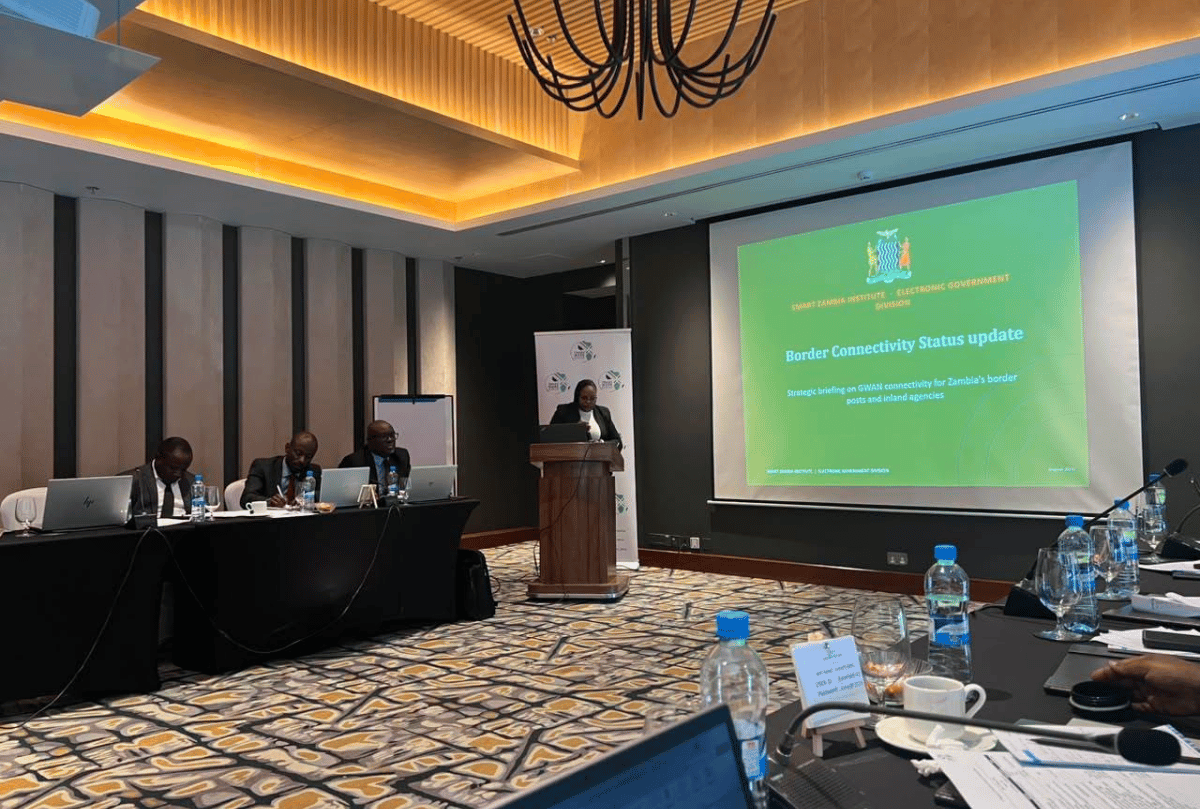
During a status update presented in Lusaka on 5 August 2026, officials from the SMART Zambia Institute confirmed that connectivity gaps remain at key border posts, including Nakonde, Victoria Falls, Kazungula and Chirundu, but said plans are underway to address the challenges through a nationwide connectivity upgrade.
The presentation was delivered by Chewe Nkole, Acting Assistant Director for Projects and Quality Assurance, Manyando Namakando, Principal Digital Services Officer, and Nkwendela Lupumpaula, Senior Networks Officer. The officials outlined the government’s plan to implement a single national connectivity standard through the Government Wide Area Network (GWAN).
According to the Institute, the upgraded network will provide tiered bandwidth ranging from 10 Mbps to 100 Mbps, supported by dual internet links with automatic failover, enterprise-grade firewalls and real-time data-sharing capabilities. The infrastructure is expected to improve the efficiency of border operations by enabling faster clearance of goods and travellers, enhancing security oversight and reducing ICT costs through shared government infrastructure.
The officials noted that reliable connectivity is a critical enabler of efficient trade facilitation, stating that while it is often overlooked, network infrastructure frequently represents the primary constraint to seamless border operations.
To support the initiative, TradeMark Africa has commissioned an independent Network Specialist firm to audit and validate ICT infrastructure at five priority trade corridors: Kazungula, Chirundu, Mwami/Mchinji, Nakonde and Kasumbalesa border posts. The assessment will follow a six-step methodology covering infrastructure audits, root-cause analysis, gap identification, target architecture design, procurement planning and independent implementation oversight.
SMART Zambia said the partnership with TradeMark Africa provides additional technical expertise and independent assurance to the programme, helping to ensure that investments deliver the intended outcomes.
The government said the initiative reflects its commitment to building a resilient national digital infrastructure that supports coordinated border management, facilitates trade and strengthens service delivery for government agencies, border officials and travellers across Zambia.
