

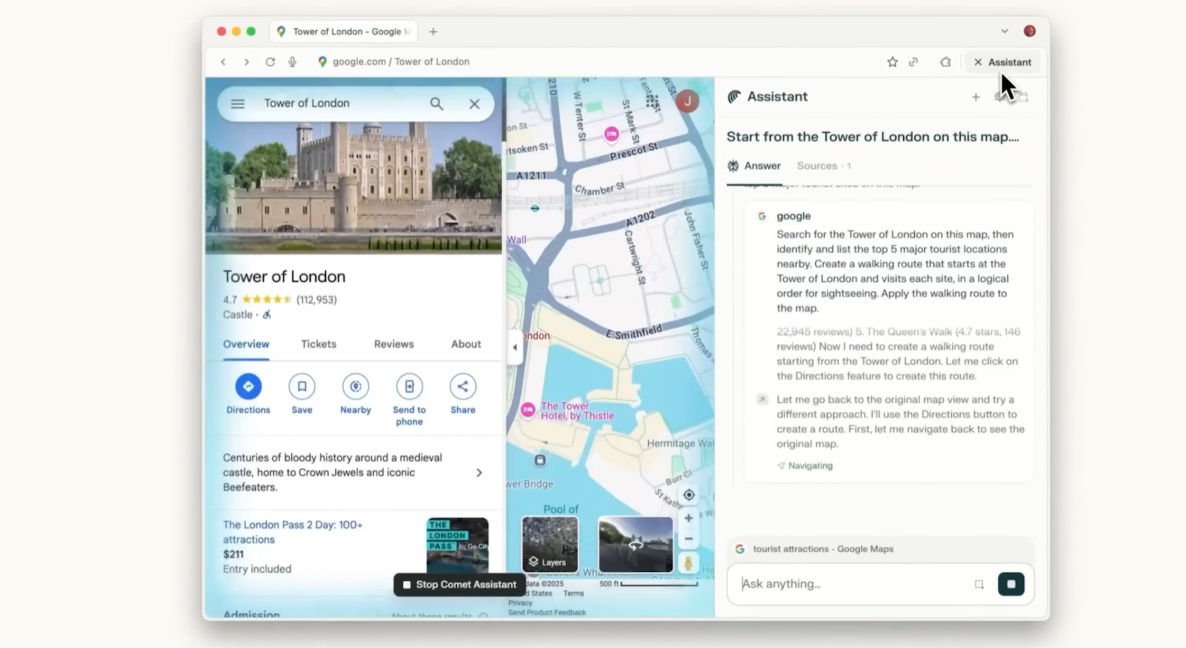
Desktop AI browsers have been hogging all the attention. That’s about to change. Perplexity started rolling out Comet Android beta invites to select testers, bringing its AI-powered browser to mobile for the first time. Early screenshots show the app closely mirrors the desktop experience with dark mode, ad blocking, tab management, and AI-powered features built directly into the interface.
What Comet brings to Android
The Comet Android beta focuses on productivity through AI assistance. Users can ask questions, summarize content, draft emails, and automate research tasks without switching between multiple apps. The browser positions itself as a personal AI assistant rather than just another way to visit websites.
Key features include homepage widgets, suggested prompts, and a settings menu that lets you toggle ad and tracker blocking. The interface opens to a prompt-forward design that encourages asking questions before typing URLs. This approach follows Perplexity’s broader strategy of making AI-native browsing feel natural on mobile devices.
Early testers report smooth performance, though the full “agentic” capabilities found on desktop may not be present yet. Features like background task automation and advanced AI-driven suggestions could arrive as beta testing progresses and feedback rolls in.
Competition heats up
Perplexity has been positioning Comet as a Chrome alternative, even approaching phone manufacturers about pre-installation deals. The company targets “tens to hundreds of millions” of users once the product stabilizes.
However, security concerns remain. Research revealed vulnerabilities that could let attackers hijack the AI through malicious URLs. Privacy issues also exist around data collection practices, with CEO Aravind Srinivas confirming Comet tracks browsing behavior for personalized ads.
Comet competes with other AI browsers like OpenAI’s ChatGPT Atlas and The Browser Company’s Dia. Google also responded by integrating Gemini AI directly into Chrome, making the AI browser space increasingly crowded.
The timeline for a public release remains unclear, though expanded testing suggests broader availability could come soon.
