

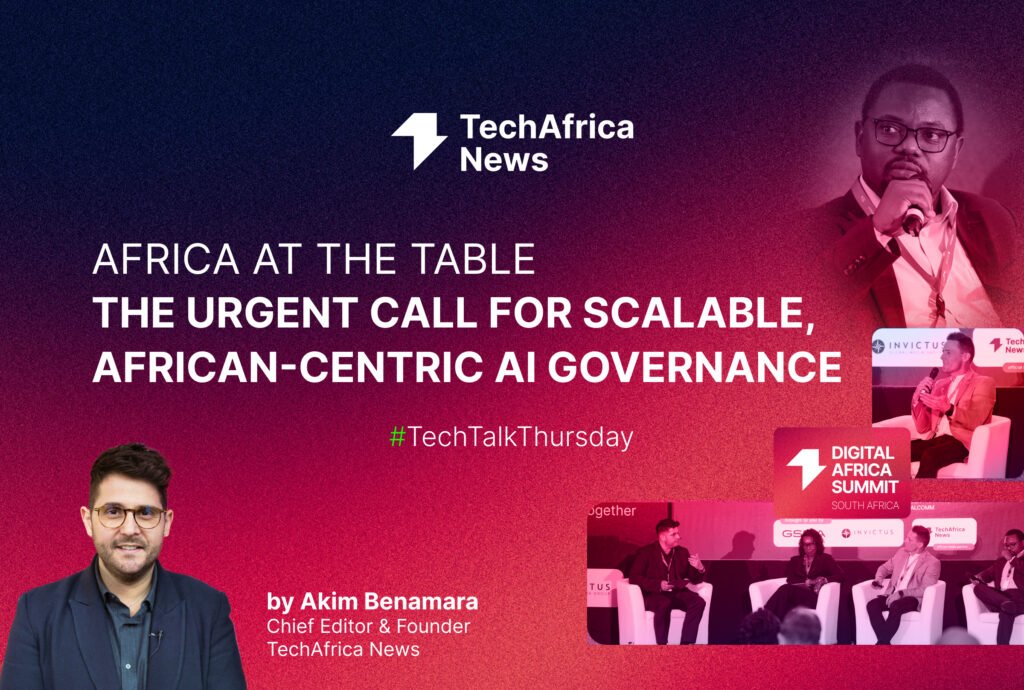
Finally, I asked Elizabeth about the risk of AI widening the digital divide. She outlined the policy and investment necessities: infrastructure (like 5G connectivity) and computing capacity (both cloud and on-device/edge AI) are fundamental. Policy frameworks, she urged, must look at global standards but absolutely reflect local realities. Most critically, she stressed the necessity of fostering a local innovation ecosystem—we must build our own tools and systems.
“What is AI? If I ask this question here, how many different answers would I get? The question is not only what AI is, but also what AI can do for you. At its core, AI is an enabler—it helps you do what you are already doing, only better. For example, if you sell vegetables, AI can help you run your trade more efficiently. Regarding your question on how to prevent AI from widening existing divides, several strategies come to mind. Your question is how we can ensure AI does not create a wider divide. Several things come to mind. First and foremost is infrastructure. If people are not connected, they cannot access AI, no matter how advanced on-device AI technologies may be. Therefore, a fundamental policy priority is to ensure widespread connectivity, whether through 5G or other means, to enable equitable access to AI.”
-Elizabeth Migwalla, Vice President of International Government Affairs, Qualcomm
This led to the most powerful insight of our entire discussion, addressing Africa’s place in the global AI discourse:
“If we are not at the table creating the directions, then we are on the menu.”
This statement encapsulates the urgent geopolitical dimension of AI adoption, demanding that Africa dictates how this technology evolves and mobilize sustainable financing to allow innovators to scale. Elizabeth highlighted the staggering difference in funding, noting that the money developed countries are pouring into AI sometimes exceeds our own GDPs.
In wrapping up, I asked the panelists to prioritize sectors for immediate AI intervention. Anthony Mveyange, drawing on a recent survey of policymakers in South Africa, placed Health and Education at the top, emphasizing education for “epistemological transformation”. Stefan Steffen prioritized the MSME segment, recognizing its role as the engine for job creation and growth. Elizabeth Migwalla added Agriculture, acknowledging its fundamental importance: “If you can’t eat, if you can’t produce food”.
Conclusion: A Unified Future
The session confirmed that the conversation around AI in Africa has matured far beyond theoretical potential. We are now grappling with practical necessities: establishing unified, transboundary data ecosystems; developing reusable, scalable assets; and ensuring accountability through radical transparency, perhaps utilizing a “QR code” approach for algorithms.
The overriding takeaway, and my personal reflection as the moderator, is the urgent need for a unified African identity in AI governance and innovation. The challenge is not technological; it is one of will, policy, and integration. We must internalize Anthony Mveyange’s assertion that our diversity is an asset, and apply Elizabeth Migwalla’s call to action: Africa cannot afford to be passive recipients of globally imported frameworks. We must be at the table, designing for our unique languages, our local realities, and scaling our own solutions through deliberate partnerships and essential investments.
If we collectively foster local innovation, invest in AI literacy for citizens and parliamentarians, and demand policy frameworks that are African-centric, we can ensure that AI becomes the equalizer we hope it to be—not widening the divide, but fulfilling the promise of data-driven governance for the continent’s future. The pathway to AI for good is paved not just with code, but with continental cooperation and sovereign intent.
