

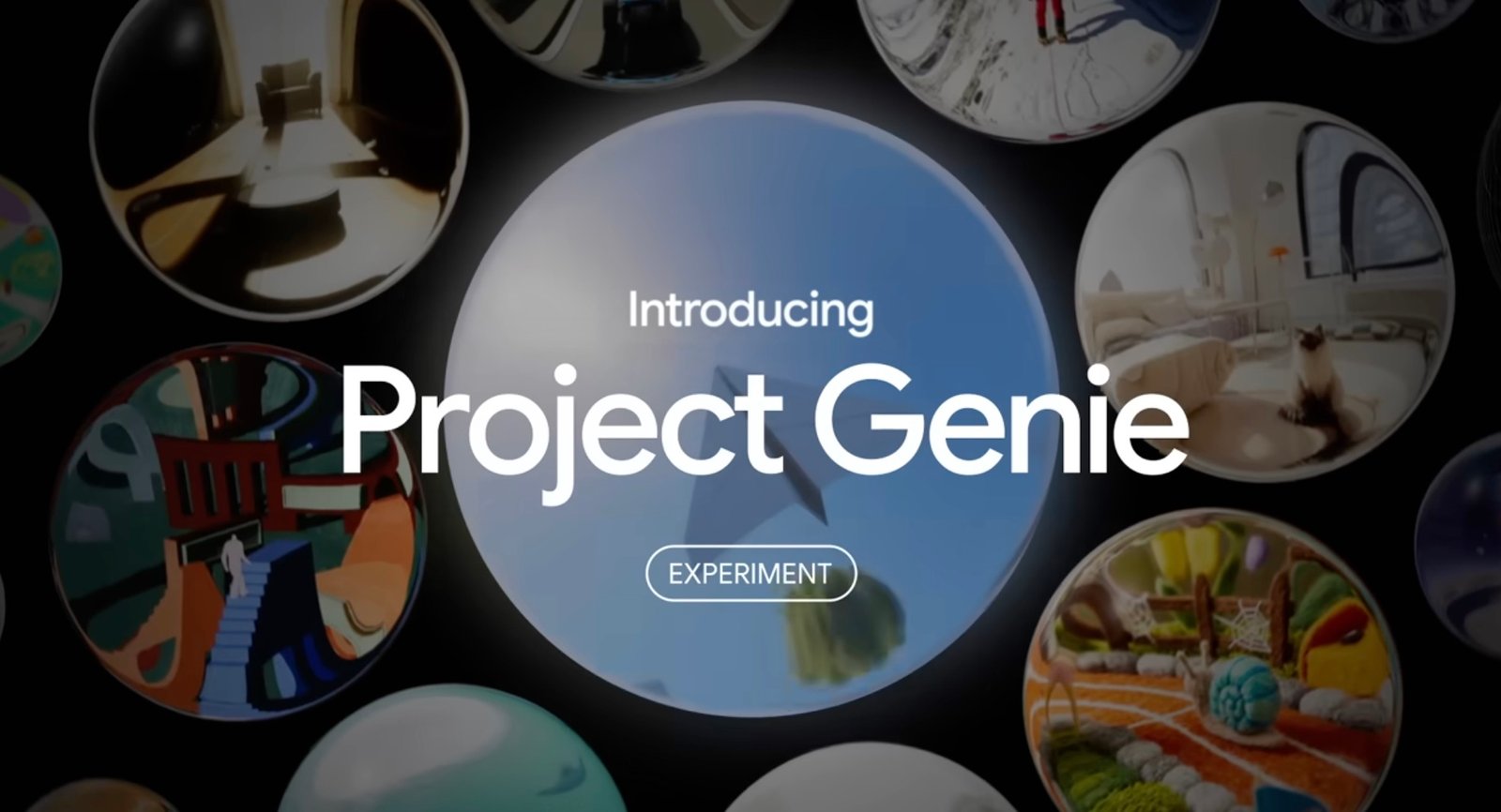
AI’s continued reach and influence into different commercial and creative spaces has undoubtedly been a point of contention in recent times, although it’s pretty clear that major players within the industry are hell-bent on pushing it to its limits, often in ways that have yet to fully manifest. take for example Google, which recently announced the launch of Project Genie.
For those unfamiliar with it, Project Genie is an experimental research prototype that allows users to create and explore their own interactive, real-time environments. The platform runs on the new Genie 3 model alongside Nano Banana Pro and Gemini, and is able to simulate physics and environmental dynamics in real time, predicting how a world evolves based on a user’s specific actions. This allows the system to simulate a vast range of scenarios, from robotics and animation to historical settings and fictional landscapes.
A web-based app, Google says that project Genie is built around World Sketching, World Exploration, and World Remixing. Users can begin by prompting the AI with text or images to define their environment and character. They can also fine-tune their world’s aesthetics and choose different visual perspectives before entering the simulation.
Once inside, the environment generates dynamically as the user moves, allowing for seamless exploration. Additionally, the “Remix” feature enables users to build upon existing worlds or curated examples from a public gallery for example, with the option to download videos of their journeys. It should be noted though that Project Genie is currently an experimental prototype within Google Labs.
As an early-stage research model, the system currently has limitations such as a 60-second cap on generations, and there might be instances where users might run into inconsistencies in physics or prompt adherence. Starting today, Google is rolling out availability for Google AI Ultra subscribers aged 18 and older within the United States, with plans to expand to additional territories in the future.
