

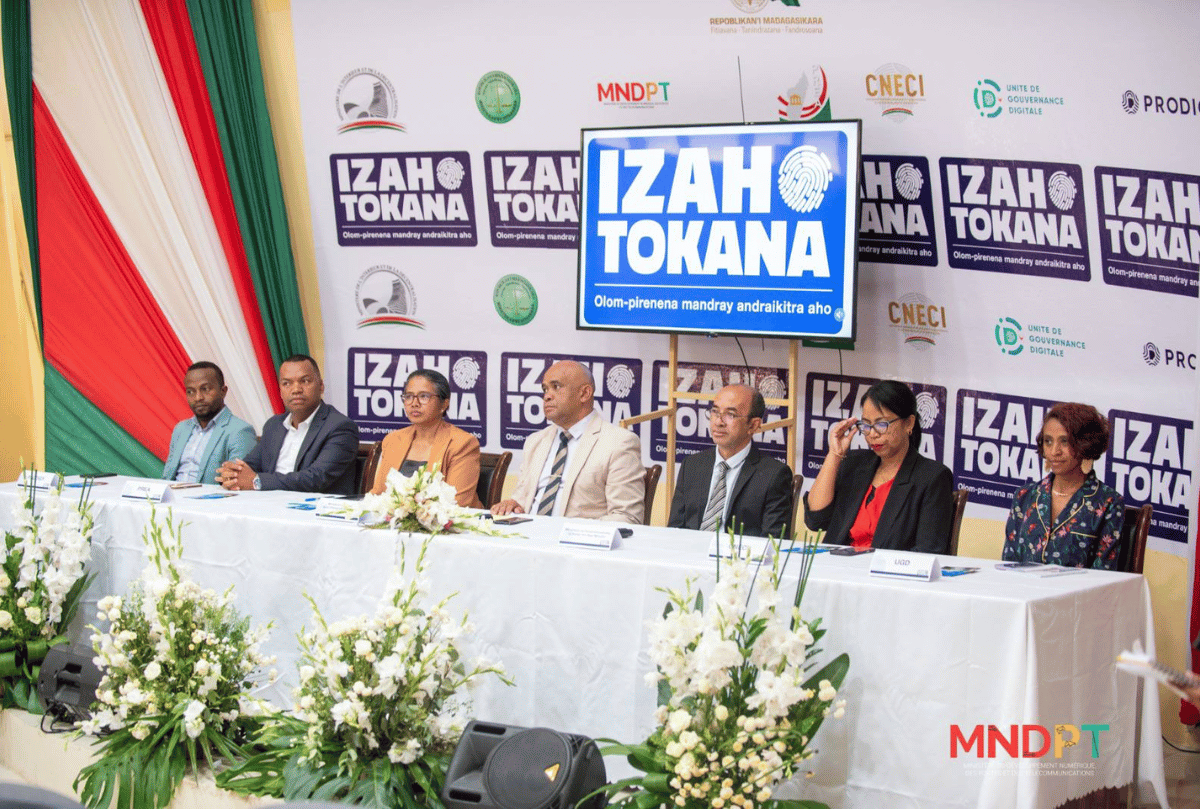
It seeks to assign a Unique Identifier Number (NUI) to over 12 million Malagasy people, marking a major step toward digital governance and inclusion.
Madagascar has officially launched its national biometric enrolment program, a large-scale initiative aimed at providing a secure legal identity to every citizen. Launched on January 27, 2026, the project was approved by the Council of Ministers and is supported by the World Bank’s PRODIGY project. It seeks to assign a Unique Identifier Number (NUI) to over 12 million Malagasy people, marking a major step toward digital governance and inclusion.
The Ministry of the Interior and Decentralization (MID) is leading the operational implementation, while the Ministry of Digital Development, Posts and Telecommunications (MNDPT) serves as the technological backbone. Through its Digital Governance Unit (UGD), the MNDPT ensures system interoperability between the Justice Department, Civil Registry, and other public services. The program aims to make the NUI a key tool for economic and social inclusion, leveraging digital solutions for efficient public service delivery.
The enrolment process begins with a pilot phase in the Atsimondrano district, which involves top state authorities to test and adjust technical systems. Following this, a nationwide rollout is planned between April and June 2026, targeting the registration of approximately 2 million citizens, primarily adults aged 18 and above. The program captures biometric data, including fingerprints, facial recognition, and iris scans, ensuring the uniqueness of each record and eliminating duplicate identities.
By establishing this robust digital infrastructure, Madagascar is not only counting its population but also laying the foundation for faster, transparent, and accessible public services, positioning the country for a more inclusive digital future.
