


Do you remember modular phones like the Essential Phone or Google’s Project Ara? The whole pitch felt bold. You kept one core device and swapped parts in and out whenever you felt like it. Camera, speakers, battery — you picked what fit your needs. Still, both brands pulled the plug after two years. Now with MWC 2026 around the corner, TECNO wants another shot at modular Android phones. In my TECNO Modular Phone preview, I break down what the company has planned and whether it can win over a niche crowd the way foldables did a few years back.
Design
Most phones lock you into one fixed setup. TECNO flips that idea. The brand builds ultrathin, flexible modules that let creators and professionals shape the phone for each scenario. Modular gear often adds bulk and cost, so the TENCO Modular Phone’s 4.9 mm frame stands out. Snap on the 4.5 mm power bank module and the total size still matches many flagship phones people carry right now.
TENCO takes a fresh approach to modular technology. Magnetic attachments snap onto the core phone and link through Wi-Fi, Bluetooth, and mmWave. The pairing process kicks in on its own, so you skip setup steps and jump right into use.
The phone sports a glass back with an anti-glare laminate that creates a soft matte feel. A metal frame wraps the edges and adds strength with sharp contrast. Fine lines run across the rear and split it into eight modular zones, which help you line up accessories without messing up the clean look.
Accessories: Customizable Modular Suite
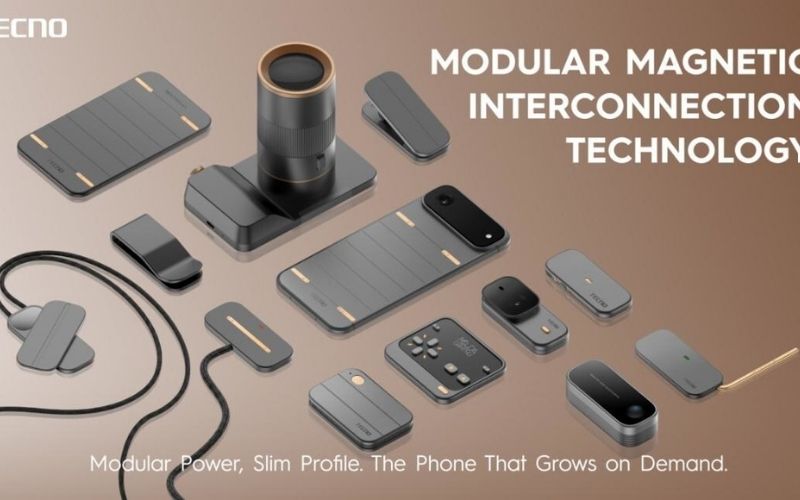
Flip the phone over and you’ll spot eight modular zones that guide where each add-on should sit.
Right now, the ecosystem includes around ten modules. Creators get an action camera. A telephoto lens turns the phone screen into a viewfinder. TECNO even shows off tools for off-grid communication. You carry what you need and leave the rest at home.
Looking ahead
Like many MWC concepts, the TENCO Modular Phone has no launch date or price tag yet. TECNO frames this as a long term design vision. No one knows if it will hit store shelves, but the idea gives modular phones a new spin.
Related: MWC 2026 preview: What Google, Samsung, Xiaomi, and NVIDIA have planned
In my view, modular phones failed before because too few players ran the show, with Project Ara at the center. Other brands tried, but Google drew the most attention. The team set a two year timeline to build Ara and ship it to buyers, which felt too tight for such a huge shift. TECNO should keep that lesson in mind this time around.
Grigor Baklajyan is a copywriter covering technology at Gadget Flow. His contributions include product reviews, buying guides, how-to articles, and more.
