

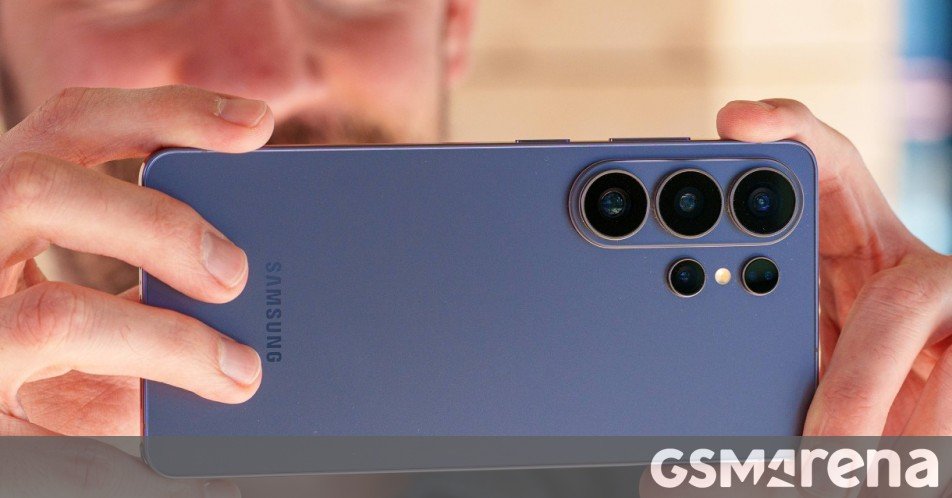
Samsung’s attention was mostly on the screen while it was designing the Galaxy S26 Ultra, but the company did throw in a few upgrades for the camera – the 200MP main and the 50MP 5x telephoto modules have wider apertures than their counterparts on the S25 Ultra (main: f/1.7 to f/1.4, tele: f/3.4 to f/2.9). The Horizon Lock mode for videos is also an interesting one.
We have a full review of the S26 Ultra coming, for now you can check out our hands-on. We wanted to share one interesting discovery first – Samsung switched to a different type of lens for the 5x module.
The S25 Ultra has a periscope lens, which uses a prism to bend the light 90°. This is pretty common especially at a focal length in this range (111mm). However, the new S26 Ultra uses a traditional lens design, the kind where the lens elements and the sensor are parallel with the phone.
There is a downside to this change – the minimum focus distance of the Galaxy S26 Ultra 5x camera is 52cm. This is double the distance of the S25 Ultra 5x lens, which could focus at 26cm:
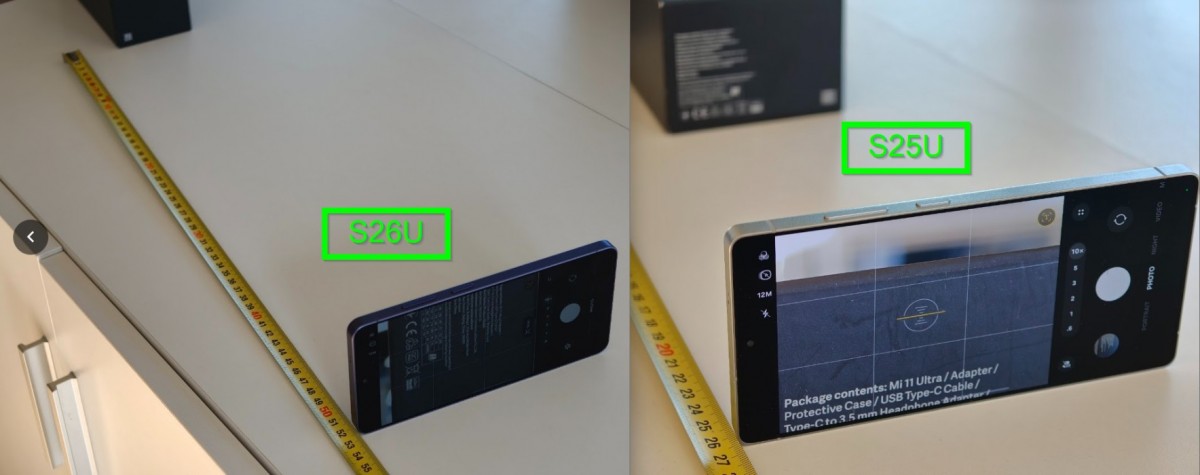
Measuring the minimum focus distance of the S26 Ultra’s and the S25 Ultra’s 5x cameras
Now, we love using telephoto lenses for close-up shots, so this is a tangible downgrade in our eyes. If you only use the telephoto cameras for far-away subjects, then you might not care about the different lens type. In fact, it may be an upgrade.
The two different lens assemblies create different bokehs – the “shape” of lights in the background that are out of focus. Here, we focused the camera on the plant in the foreground and let the lights from the cars and buildings in the background go blurry.
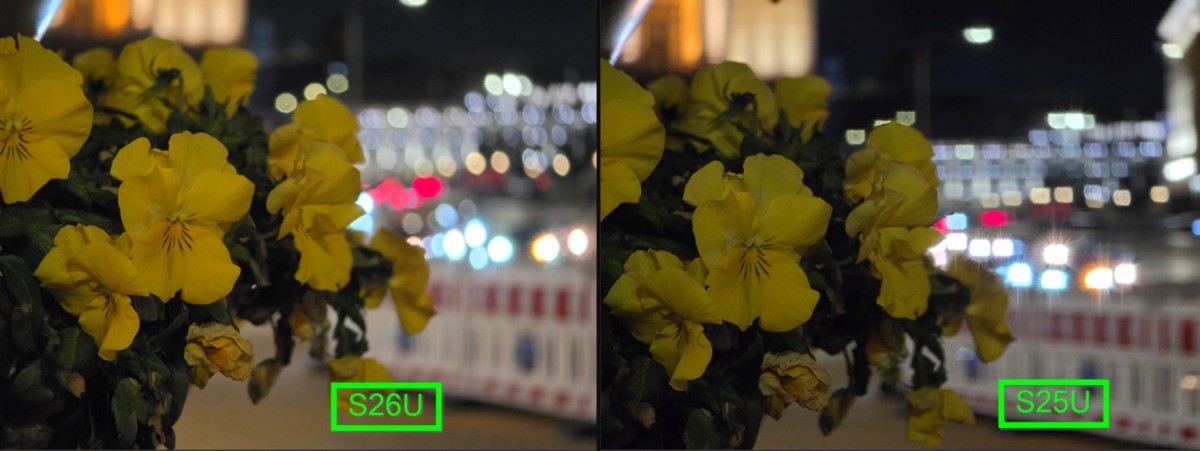
The different lens types create different bokehs
Traditional lenses create round bokeh shapes – or rather they are round in the center and start to resemble a cat’s iris more and more as they approach the edge of the image. Meanwhile, periscopes create rectangular shapes, which are less aesthetically pleasing.
Here are the full resolution shots if you want to take a closer look:


Bokeh check: Galaxy S26 Ultra • Galaxy S25 Ultra
In theory, the wider aperture of the new 5x camera (f/2.9 vs. f/3.4) should enable better low-light photos – it lets in more light. But we’ll leave the image quality comparison for the review.
We checked Samsung’s official site and found that the Galaxy S26 Ultra page doesn’t contain any mentions of a periscope (but the S25 Ultra page does). In fact, Samsung doesn’t say much about the camera at all, just that it’s better in low-light situations. We have a theory as to why Samsung swapped lens types and it’s not because of the wider aperture, but we’ll save that for the review.
