

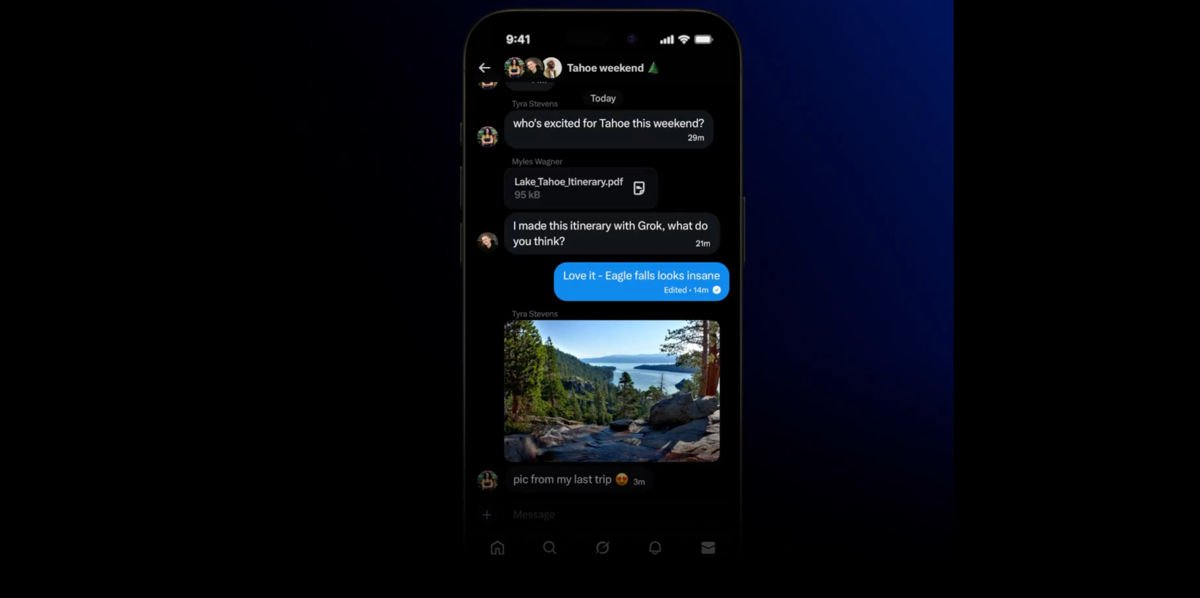
X, formerly known as Twitter, just launched a standalone messaging app called Chat. The privacy-focused service is available on iOS and web, with Android support coming soon. From what we can tell, the app aims to compete directly with WhatsApp, Telegram, and China’s WeChat.
This marks a significant expansion beyond social posting. X is continuing its transformation into a full communications platform, a vision Musk has been pursuing since acquiring the company.
What the X Chat App Offers
The X Chat app features end-to-end encryption to keep conversations private. Messages can be set to disappear after a timer, and screenshot blocking is included to enhance privacy. Users can send any file type and make audio or video calls without needing a phone number.
The app unifies legacy direct messages from X with the new chat functions into a single inbox. This means your existing X conversations carry over seamlessly. It’s a practical approach that avoids forcing users to start fresh.
Some advanced features like expanded storage, priority support, and early access to experimental tools are reserved for X Premium subscribers. This tiered setup mirrors X’s ongoing push to get more users paying for features across the platform.
How It Compares to Competitors
The X Chat app enters a crowded market. WhatsApp dominates globally, while Telegram has built a loyal following among privacy-focused users. X’s approach of not requiring phone numbers sets it apart. You can message anyone with an X account globally without exchanging personal contact information.
However, the app faces some pretty stiff competition. Established messaging apps benefit from network effects. People use them because their contacts already do. Convincing users to adopt yet another messaging platform might not be easy, regardless of the features offered.
That being said, it’s not hard to see that the app represents the company’s vision of transforming X into a multifunctional all-in-one platform similar to WeChat. That Chinese app successfully integrates social networking, messaging, and payments into a single ecosystem. Whether Western users want that level of consolidation remains unclear.
