
The Hallucination Tax: The Cost of Enterprise AI Choosing Speed Before Governance
Earlier this month, the industry reacted to an unexpected self-published blog post from Anthropic entitled How Anthropic enables self-service data analytics with Claude. While the timing of the post was a surprise, the contents were not. The most interesting takeaway for me: without skills, Claude’s ability to answer analytics questions accurately didn’t exceed 21% on our evals. Adding skills gets these numbers consistently above 95% in aggregate. If this is what Anthropic found running AI on its own data, what are all the other enterprise AI leaders seeing?
Based on reactions and conversations following the blog post, many in the industry viewed Anthropic’s findings as a wake-up call. But the bigger lesson wasn’t about skills. It was about context.
The discussion quickly expanded beyond Anthropic’s implementation to a broader question: how much business context does AI need to operate reliably inside an enterprise? The answer, increasingly, is more than many organizations realize.
The semantic layer gives AI systems a common understanding of what enterprise data means. Translating raw data into governed business definitions that every system agrees on is becoming a critical step not just for accuracy, but for AI that can be trusted at scale.
And Anthropic is not alone. Our recent Harris Poll research found that 55% of tech decision-makers are sometimes personally correcting or pushing back on AI output. Another 89% said they can’t have full confidence in AI insights until the underlying data is trusted and verified.

(Shutterstock/DigineerStation)
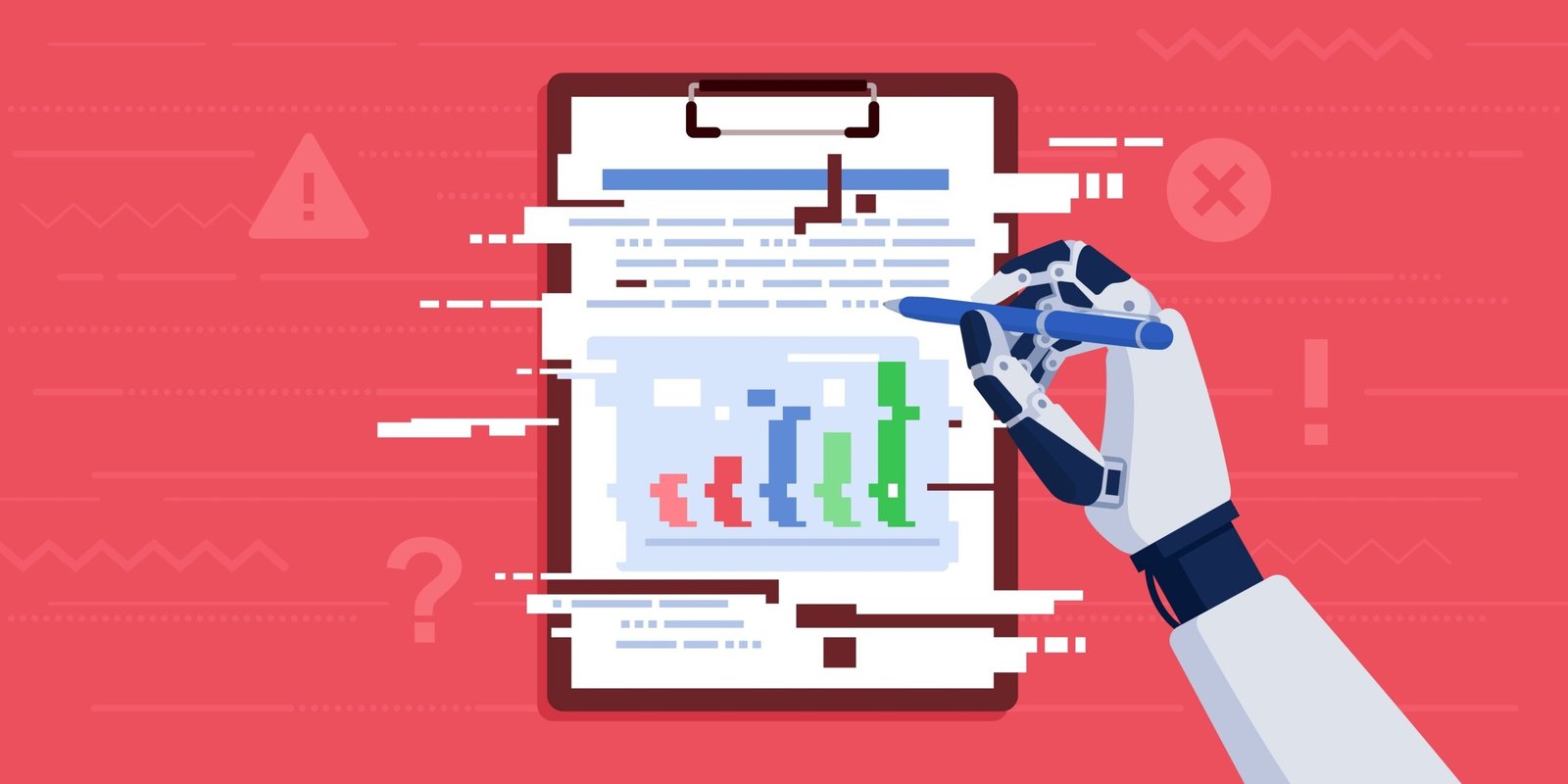
This is what I call the hallucination tax: the hidden cost of manual oversight, validation, rework, and risk management required when AI systems operate without trusted context. Every time an employee has to verify an answer, correct an output, or second-guess a recommendation, the organization pays that tax.
And the governance problem is nothing new. Enterprises have struggled for years to establish clean, accurate, bias-free data and most are still working to get there. As AI agents move deeper into core enterprise workflows, the stakes are much higher. These agents are no longer just searching for answers. They are taking action, and when the data underneath them is ungoverned, they drive the wrong decisions. At that point, accuracy isn’t just a technical metric. It’s a business risk and enterprises are paying for it.
Gartner research highlights the gap. Organizations that implement semantic modeling approaches such as taxonomies and ontologies are up to 2.2 times more likely to achieve high effectiveness in data engineering practices that support AI use cases. Yet only 40% have implemented them.
For technology leaders, there are three priorities that deserve immediate attention.
- Govern the meaning, not just the storage: The bottleneck in enterprise AI isn’t data storage. It’s business meaning. When raw data lacks agreed definitions, every AI system interprets it differently. A shared semantic layer creates the common understanding that allows humans and AI to operate from the same context. As organizations deploy more AI systems and agents, that foundation becomes increasingly important.
- Treat data quality as AI infrastructure: Data quality has always been a prerequisite for AI trust, but most enterprises still view it as a checkbox rather than core infrastructure. This will no longer work. Bad data doesn’t just produce wrong answers anymore. As AI agents move from answering questions to taking action, bad data produces wrong actions.
- Close the accountability gap before your agents do: When AI moves from answering questions to taking action, ungoverned data stops being an accuracy problem and becomes a liability problem. Governance needs to be built in from the start, not an afterthought during deployment. Otherwise, the hallucination tax becomes unavoidable.
The organizations that succeed with AI will not necessarily be those with access to the best models. Increasingly, those models are widely available.

(Yuriy2012/Shutterstock)
The differentiator will be trust. The ability to provide AI with accurate, governed context, maintain that context as business conditions evolve, and ensure autonomous systems operate within established guardrails.
Anthropic’s blog post offered a useful reminder that better models alone do not solve the enterprise AI challenge. As AI agents become embedded in everyday operations, the conversation must move beyond model performance and toward operational trust.
The organizations that reduce the hallucination tax first will be the ones best positioned to capture the full value of AI.
About the Author: Felix Van de Maele has led Collibra for more than ten years of record growth and is responsible for global business strategy. Prior to cofounding Collibra, he served as a researcher at the Semantics Technology and Applications Research Laboratory (STARLab) at the Vrije Universiteit Brussel, where he focused on ontology-focused crawlers for the semantic web and semantic data integration.
Related


Broadcom Announces VMware Cloud Foundation 9.1
PALO ALTO, Calif., May 5, 2026 — Broadcom Inc., a global technology leader that designs,…
NVIDIA Announces Financial Results for 1st Quarter Fiscal 2027
SANTA CLARA, Calif., May 21, 2026 — NVIDIA (NASDAQ: NVDA) has reported record revenue for…
Cerebras Systems Announces Launch of Initial Public Offering
SUNNYVALE, Calif., May 4, 2026 — Cerebras Systems, Inc. today announced that it plans to commence…

Google Unveils Gemini Enterprise Agent Platform, Expands Vertex AI into Full Agent Stack
At Google Cloud Next 2026 in Las Vegas this week, the company announced major changes…
NVIDIA Launches Cosmos 3, the Open Frontier Foundation Model for Physical AI
TAIPEI, Taiwan, June 1, 2026 — NVIDIA today launched NVIDIA Cosmos 3, an open world…
OpenAI Launches Deployment Company to Scale Enterprise AI Adoption
OpenAI has agreed to acquire Tomoro, giving the OpenAI Deployment Company experienced Forward Deployed Engineers…

The Hallucination Tax: The Cost of Enterprise AI Choosing Speed Before Governance
Earlier this month, the industry reacted to an unexpected self-published blog post from Anthropic entitled…

Booz Allen Survey: Federal Agencies Accelerate Agentic AI Adoption Despite Significant Trust and Security Gaps
MCLEAN, Va., July 21, 2026 — As federal agencies rapidly adopt agentic AI systems capable of…
Microsoft and Mistral Expand AI Partnership with Sovereign Cloud and Azure Integration
REDMOND, Wash., and PARIS, July 21, 2026 — Microsoft Corp. and Mistral on Tuesday announced…
SkyPilot Launches with $20M to Accelerate Custom Intelligence for Frontier AI Teams
SAN FRANCISCO, July 21, 2026 — SkyPilot today announced it has launched from stealth with…
Gartner Forecasts Worldwide AI Platforms and Models Market to Grow 63% in 2026
July 20, 2026 — Worldwide end-user spending on AI models and platforms is projected to…
Intel and Google Cloud Collaborate to Accelerate Intel’s AI-Enabled Enterprise Transformation
SANTA CLARA, Calif., and SUNNYVALE, Calif., July 17, 2026 — Intel and Google Cloud have…
