

Ergonomic chair pitches land in my inbox constantly.
And after 13 years of covering tech, I’ve developed a fairly reliable filter for them. You read the headline feature. You check whether the engineering actually supports it. Usually, the answer is: sort of, but not really, and here’s a lot of attractive photography to help you not notice.
The LiberNovo Maxis passed the filter.
Not because it has an impressive feature list — it does, but that’s not the point. It passed because when I started pulling at the specs, every single one traced back to a specific problem that big and tall users actually have. That’s a more interesting story than “we made a bigger chair.”
Start with the seat pan, because that’s where most chairs lose the plot
If you’re shopping in the big and tall category, the seat is the first thing to look at and the thing most brands get quietly wrong.
A standard ergonomic seat pan runs around 40–44cm deep. That works fine for users of average height. For anyone taller, it means their thighs extend past the seat edge and the chair is effectively load-bearing on the back of their knees rather than distributing weight across the full thigh. Eight hours of that is not a comfort issue. It’s a circulation issue.
The Maxis seat pan is 52cm deep.
That’s a meaningful difference — enough to give full thigh support and eliminate the leg-dangling pressure that taller users have been quietly living with. It’s also the kind of spec that only matters if you designed the rest of the chair to match it, which LiberNovo did.
The backrest numbers that actually tell you something
The Bionic FlexFit Backrest fits users from 5’10” to 6’7″ (178–200cm) and measures 430mm across the shoulders and 520mm at the waist.
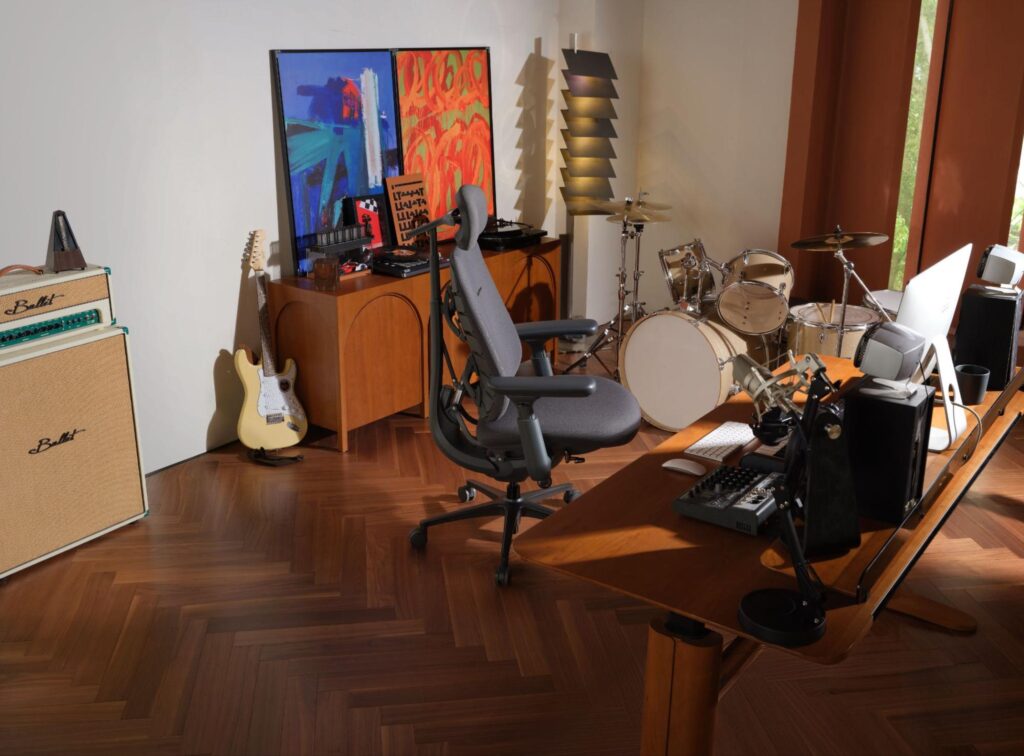
To put that in context: most standard ergonomic chairs top out around 380mm shoulder width. The Maxis is 50mm wider at the shoulders and considerably wider at the waist — which is where larger frames typically lose contact with a standard backrest and end up unsupported at exactly the points that matter most for lower back health.
Full-back contact isn’t a luxury feature. It’s the whole point of an ergonomic backrest. A chair that approximates it rather than delivers it is doing a lot of work with marketing language to cover for a structural gap.
The part I find most technically interesting: Dynamic Ergonomics at higher body mass
LiberNovo’s Dynamic Ergonomics system uses up to 60 precision joints to respond to posture shifts in real time. It’s what separates their chairs from static lumbar-support designs, and it’s genuinely well-regarded in the standard Omni.
For the Maxis, they’ve recalibrated the entire system for higher body mass.
This is the detail that separates a real big and tall chair from a labeled one. Spring tension, recline resistance, joint responsiveness — all of these behave differently at 399 lbs than at 160 lbs. A dynamic system that hasn’t been tuned for that weight range doesn’t adapt to the user. It just responds inconsistently and slowly, which is worse than a fixed lumbar in some ways because at least a fixed lumbar is predictable.
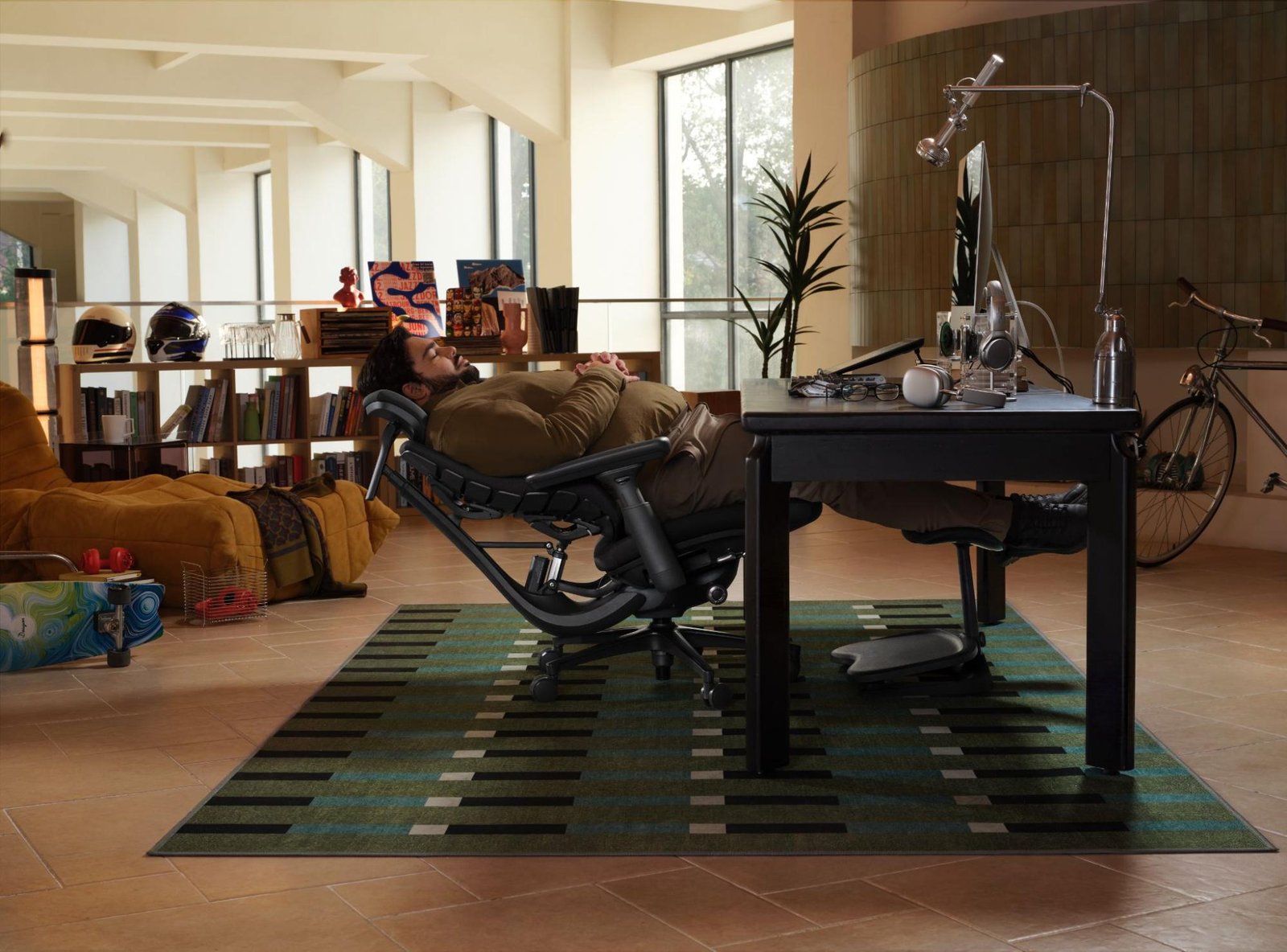
The Controlled Recline runs from 105° to 160° across five stages, held by a 6-spring progressive mechanism. Each stop is designed to engage consistently under load — meaning users can recline fully without the mechanism feeling uncertain about whether it’s going to hold. For heavier users, recline instability is one of those things that doesn’t get discussed in reviews but absolutely gets noticed in daily use.
Three features purpose-built for bigger frames
Beyond the seat and backrest, three details stand out as specifically thought through for larger users rather than borrowed from the standard platform:
Extended-Reach Neck Support — 140mm vertical and 120mm horizontal adjustment on a U-shaped frame. The range matters because a headrest with limited travel ends up positioned at shoulder height on taller users, which is functionally useless. The U-shape keeps the neck in natural alignment rather than pushing the head forward.
Arc Armrests — curved geometry designed to prevent the waist compression that straight-edge armrests cause on wider frames. If you’ve ever noticed armrests pressing into your sides rather than supporting your arms, this is the fix. Small ergonomic detail, outsized quality-of-life impact over a full workday.
BIFMA-certified 399 lb (181 kg) frame — the BIFMA certification means this capacity has been independently tested, not just printed on a spec sheet. That matters for long-term durability of the mechanism, and for whether the dynamic recline continues to function as intended over years of actual use under real load
Other than this, the team has also come up with an exclusive New Product launching early bird price.
– LiberNovo Maxis Series starts from $809, up to 44% off
– LiberNovo Omni Pro starts from $909, up to 35% off
– LiberNovo Omni SE starts from $569, up to 41% off
Details and order at libernovo.com.
Madhurima Nag is the Head of Content at Gadget Flow. She side-hustles as a parenting and STEM influencer and loves to voice her opinion on product marketing, innovation and gadgets (of course!) in general.
