

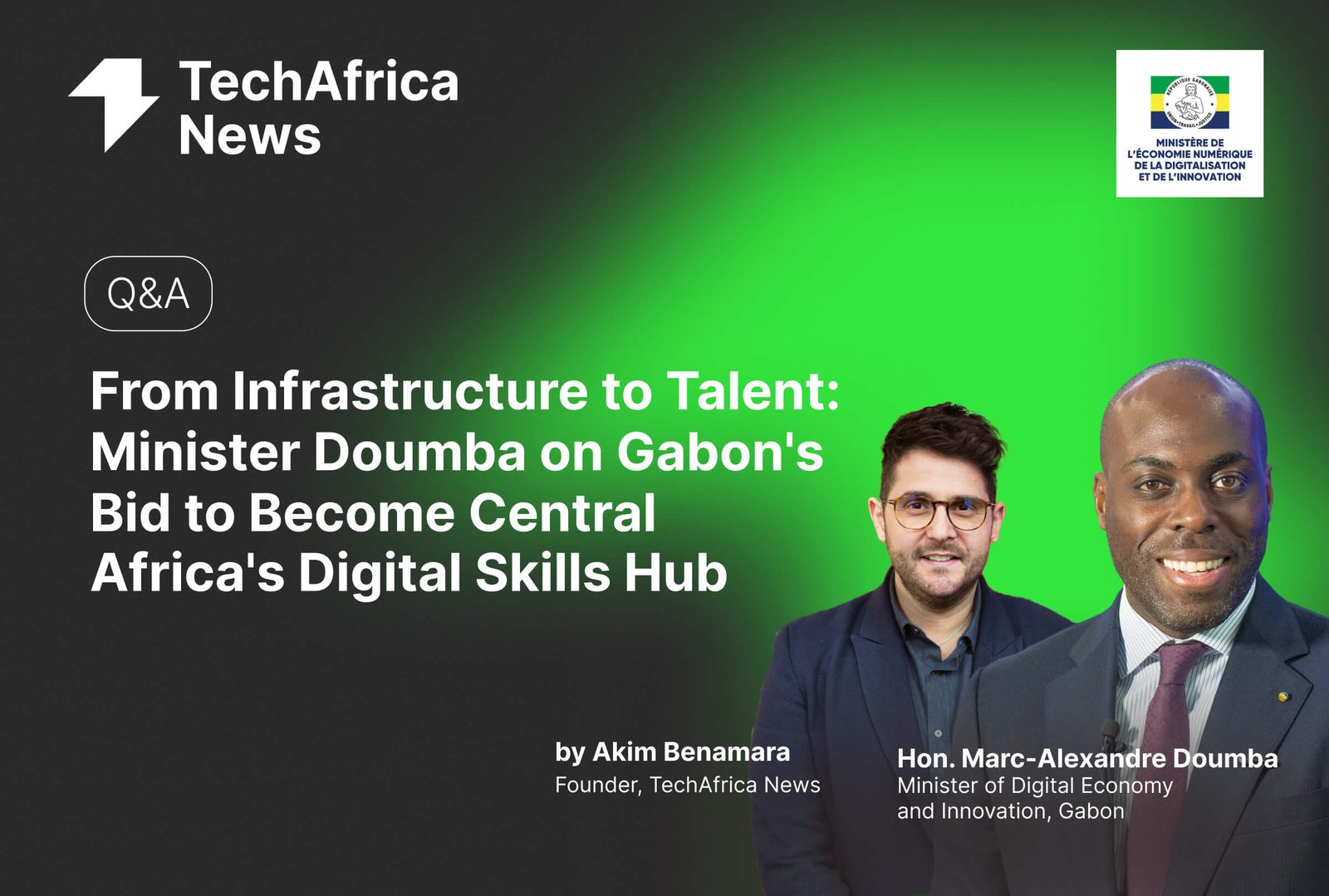
You have made digital education a personal priority within a broader reform agenda. What in your own background convinced you that human capital, not just infrastructure, would be the deciding factor in Gabon’s digital future?
I was fortunate to pursue quality education across several countries and institutions, and I know firsthand what it means to acquire the right skills at the right moment and what doors that opens. Not everyone has that privilege and I am cognizant of it.
In an increasingly skills-biased global economy, the difference between individuals who thrive and those who are left behind often comes down to the knowledge they were given access to, and when. The same logic applies to nations.
We have a young population with genuine talent, real ambition, and access to technology in ways previous generations never had. What we lack, however, is a structured pathway that converts that potential into productive capacity. Infrastructure is essential, but talent and skills are what really drive long-lasting transformative change.
The ARCEP–INPTIC agreement places skills at the heart of digital sovereignty. Why was this the right moment, and what gap were you seeing?
We are living through a defining moment. Artificial intelligence, cybersecurity, data science, and cloud technologies are restructuring economies at a pace that rewards preparation and punishes delay. Nations that fail to develop domestic expertise risk what I have described, in some publications, as premature automation; that is adopting and depending on technologies developed entirely elsewhere, without the institutional, infrastructural, or human capital foundations needed to govern, adapt, or innovate around them. Africa must avoid a new cycle of structural dependency.
“Demand for advanced digital skills is growing rapidly across Gabon’s public and private sectors, while the pipeline of qualified professionals remains thin. ARCEP, as the sector’s regulatory authority, has both the technical legitimacy and the institutional interest to help close that gap because a regulator that cannot find qualified national talent to staff a cybersecurity team or manage spectrum allocation is a regulator with a structural problem. The partnership with INPTIC is, in that sense, also an act of institutional self-interest, which is exactly what makes it durable.”
– Hon. Marc-Alexandre Doumba, Minister of Digital Economy and Innovation, Gabon
The support will be deployed progressively. Can you walk us through the implementation process and the first milestones citizens should expect?
Our approach is phased, practical, and results-oriented. ARCEP will support INPTIC for three years, by investing in modernizing the classroom environment, adding the right equipment, strengthening the governance.
The second phase will focus on upgrading the curriculum to ensure it matches the national demand for digital skills, and securing partnerships with higher-rated institutions, as we have done with INPT Morocco, to support knowledge-transfer and exchange programs for students and teachers. This is where we need to transition from basic education of information technology to programs that train in areas such as artificial intelligence, cybersecurity, data science, software engineering, and digital innovation.
The third stage focuses on research, entrepreneurship, and innovation, creating opportunities for students and young professionals to develop solutions that address real challenges facing Gabon and the wider region. We have the Centre Gabonais de l’Innovation, which is an innovation lab that connects students not only to academic mentorship but to real industry problems, including those generated by our own national digital programs. GADIWA, our national citizen wallet, and the platforms we are deploying across social protection and public services are themselves sources of applied research questions. We want INPTIC graduates to be part of solving them, not observers.
