

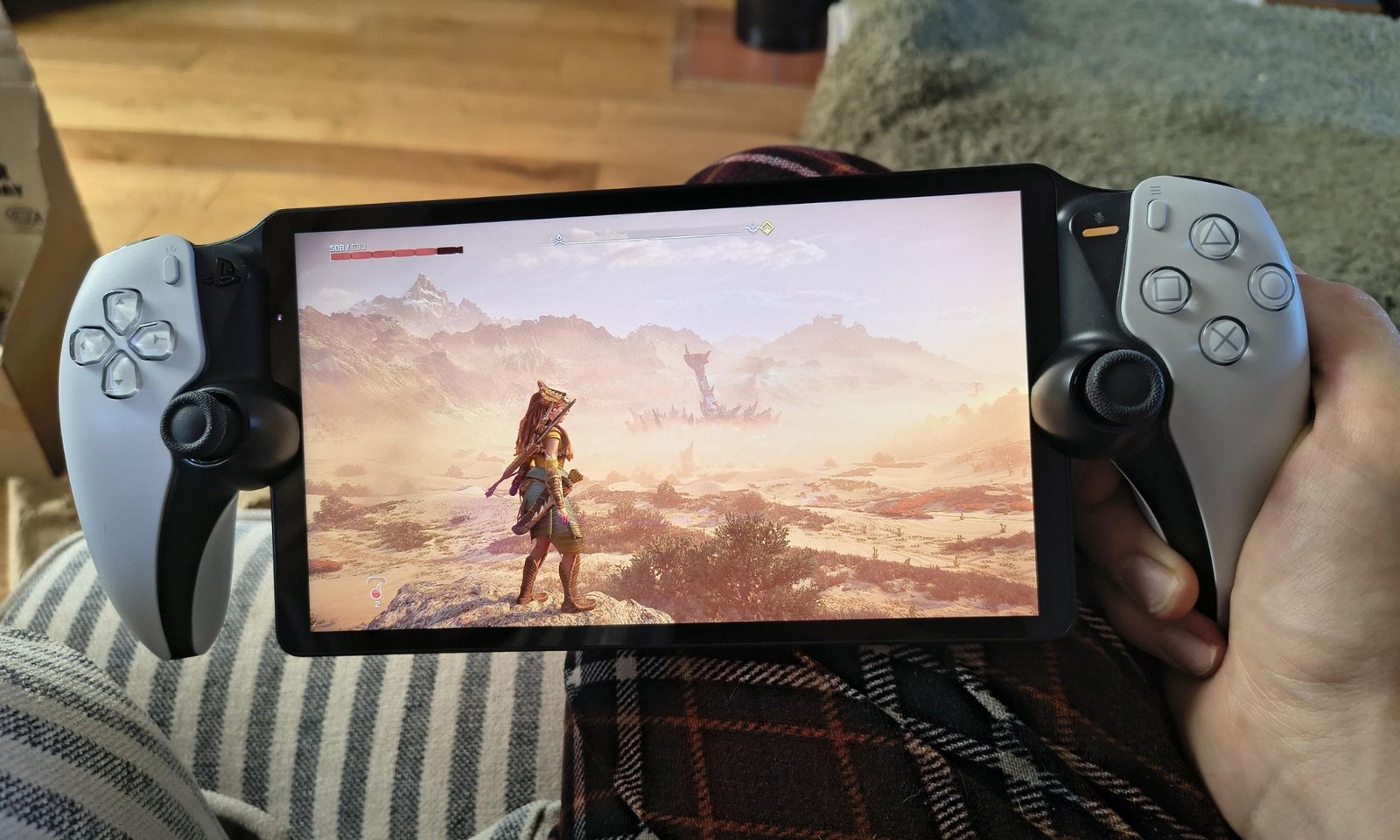
OK, before you throw mud at me in the comments, let me admit something. I know the more obvious comparison would have been the Nintendo Switch 2 versus a Steam Deck or ROG Ally. Even so, plenty of people still end up choosing between a PlayStation Portal and a Nintendo Switch 2 because both promise handheld gaming, even if each one solves a different problem.
Both compete for the same chunk of your free time. Maybe you have 20 minutes before bed, the living room TV is busy, or you want to keep playing somewhere else in the house. The PlayStation Portal puts your PS5 library in your hands for $249, assuming you already own Sony’s console. The Nintendo Switch 2 costs $449, with a price increase on the way, but packs its own hardware and game library into a single device. Both sound appealing at first glance, but the similarities fade once you spend time with each one.
Quick verdict
Go with the PlayStation Portal when you already own a PS5, play at home on solid Wi-Fi, and want a second screen for the nights someone else has the TV. Reach for the Switch 2 if you need a handheld that works on a plane or survives a home internet outage, and when owning your games outright matters more than streaming a rotating catalog.
Playing away from home Wi-Fi
The whole point of a handheld, for a lot of buyers, is that it goes places a console can’t follow. That’s where these two split hardest. The Switch 2 runs games on dedicated NVIDIA hardware and stores them locally, so a plane, a car, or a dead router never touches the experience.
Streaming is the entire job for the Portal, since it has no local processing of its own and pulls every frame from a PS5 or Sony’s servers. Sony recommends at least 15 Mbps for a smooth experience, but real-world use can vary. Even a fast connection doesn’t guarantee a great session if the network has restrictions or instability.
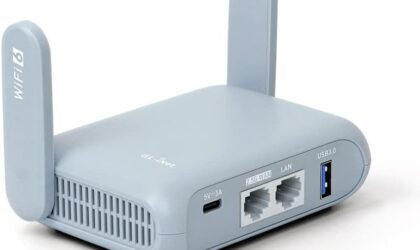
GL.iNet GL-MT3000: portable travel router
The biggest issue appears when you leave home. Many hotel and public Wi-Fi networks require a browser login before they allow access, and the Portal has no built-in web browser to complete the process. You can work around the limitation with travel routers or other network adapters, but carrying extra hardware increases the cost and adds more gear to your bag. For travel, I’d choose the Switch 2 because you can play anywhere without needing an internet connection.
Cost over time
The upfront price only tells half the story, because the Portal grows more expensive to own over time. At launch, the Portal costs $249, and if you already own a PS5, that’s all you need for Remote Play with no recurring fees.
Cloud Streaming changes that equation, since playing without a PS5 in the house requires a PlayStation Plus Premium subscription priced around $160 a year. Stack that against the console price and by year two you’re past $500 in total spending, more than a PS5 costs outright, without ever owning one. The Switch 2 asks for one payment of $450 today, rising to $500 on September 1, 2026, and it stays yours no matter what happens to any subscription. For anyone planning to rely on Cloud Streaming, the Switch 2 offers stronger long-term value because the Portal’s subscription costs exceed the price of buying a PS5 outright within a couple of years.
Latency in fast, competitive games
A handheld is only as good as what you can play without fighting the controls. Every input on the Portal travels to a PS5 or a server and back before you see the result, adding network delay on top of your Wi-Fi connection. Network latency remains part of every session.
Racing games and turn-based titles handle the extra delay well, but shooters and other reflex-heavy games expose it right away. The Switch 2 processes every input on the console, so button presses register without a network round trip. The Switch 2 delivers the better experience for competitive and reflex-heavy games because local processing removes the network delay built into the Portal.
Controller ergonomics and haptics
Comfort matters more than most spec sheets let on, especially for sessions that run past an hour. The Portal is essentially a DualSense split in half around an eight-inch LCD screen, so it inherits full console-size grips and adaptive triggers, the feature that adds resistance when you’re pulling a trigger or drawing a bow in a supported game.
The Switch 2’s redesigned Joy-Cons are larger than the original Switch’s, with bigger buttons, a magnetic attachment system, and a dedicated GameChat button. Neither controller is a step down from its predecessor, but the Portal’s grip shape and adaptive triggers give it an edge for long sessions. Players who prioritize controller feel and long gaming sessions will prefer the Portal’s DualSense-style design over the Switch 2’s Joy-Cons.
My only concern is stick drift. PS5 DualSense controllers have a reputation for developing stick issues, and I experienced it myself with my controller at a local gaming lounge. I’ve also seen Portal owners discuss similar concerns online. Since the Portal uses a similar stick setup, the possibility of long-term reliability issues is something I’d consider before making a purchase.
Game library and ownership
What you’re allowed to play, and whether you keep access later, separates the PlayStation Portal and Nintendo Switch 2 more than almost any other factor.
Sony’s Cloud Streaming update pushed the Portal’s library past 3,000 titles, combining a rotating PlayStation Plus catalog with games linked to your account through direct purchase. The catch is that games in the PlayStation Plus catalog can leave the service at any time, and every streamed title requires an active subscription, even if you bought it.
The Switch 2 takes a different approach. Buy a physical game card or a digital copy, and the game remains yours to play. Nintendo also keeps first-party exclusives like Mario Kart World and Donkey Kong Bananza on its own platform.
Players who value permanent access get more certainty with the Switch 2, while part of the Portal’s library depends on an active subscription and Sony keeping games in the streaming catalog.
Battery life
Before I started digging into Amazon reviews, I expected the Nintendo Switch 2 to win the battery category without much effort. Nintendo’s handheld runs games locally, while the PlayStation Portal streams video from a PS5 or Sony’s cloud. More processing means more power draw, right? The surprise came from what owners reported.
Portal owners often mention 4 to 5 hours of play on a charge, with several reaching 6 to 8 hours after lowering screen brightness or playing less demanding games. Heavy use can bring runtime closer to 3 to 4 hours, especially with higher brightness and full DualSense features. One complaint showed up more than once, though. Some owners noticed battery drain while the device sat unused, meaning you may pick it up after a day or two and find far less charge than expected.
Switch 2 feedback feels less predictable because battery life changes with the game. I kept seeing reports of 2 to 4 hours in handheld mode, with demanding titles landing near the lower end. Several owners mentioned charging after about 3 hours, while others reached 4 hours before looking for a cable. A few reviewers called battery life decent or good, although many also said they keep a power bank nearby for longer sessions.
Neither machine survives an all-day experience without a charger, but the Portal surprised me. After reading dozens of owner reviews, I came away with the impression that Sony’s streaming-first approach delivers longer play sessions than Nintendo’s more powerful console. If battery life matters more than native gaming, I’d feel more comfortable tossing the Portal into my bag before leaving the house.
Where the PlayStation Portal wins
The Portal makes sense for someone who already owns a PS5, has fast, stable home Wi-Fi, and wants an extra screen rather than a second console. It’s the right call when your sister has taken over the living room television with her Imperfect Women on Apple TV+ and you’d rather keep playing Spider-Man or a slower RPG from the bedroom than wait your turn.
Related: PS6 handheld rumors, meet the death of physical PlayStation discs
I see the PlayStation Portal as a way to move your PS5 gaming experience around the house rather than a true standalone handheld. It gives you another place to play when the TV is busy, but a strong internet connection is what makes the experience work. Since every game streams from your PS5 or the cloud, your network quality has a direct impact on how smooth it feels.
Sony’s handheld gaming accessory also suits players already paying for PlayStation Plus Premium, who’d use the streaming catalog whether or not they owned a Portal at all, since the subscription cost is sunk either way. Anyone chasing competitive shooters, planning to play outside the house, or hoping to skip a PS5 purchase should look elsewhere for a handheld.
Where the Nintendo Switch 2 wins
The Switch 2 makes more sense for anyone who wants a handheld in the literal sense, one that works on a train, in a waiting room, or anywhere Wi-Fi is weak or unavailable. I also think it’s the better fit for players who want to own their games instead of relying on a subscription catalog, along with Nintendo exclusives no other platform can offer. I’d love to spend time with Nintendo’s first-party titles and the more colorful, cartoon-style games that match the Switch 2’s personality.
When it comes to competitive games, I’d also pick the Switch 2. Local processing removes the input lag that can hold the Portal back in genres where every button press counts. The higher price is the biggest compromise. You’ll pay $450 today and $500 after September 1, 2026, and Nintendo’s games and accessories don’t come cheap. Skipping a subscription helps over time, but it takes a while before savings offset the higher upfront cost.
Final verdict
For most people weighing these two, the Nintendo Switch 2 is the smarter buy. It works everywhere, keeps the games you pay for, and never out-costs a PS5 through a creeping subscription. The PlayStation Portal earns its keep specifically for existing PS5 owners with strong home internet who want a second screen and nothing more ambitious. The move to avoid is buying a Portal expecting it to replace a true portable console, since outside a stable home network, it can’t.
What keeps me from recommending the Portal to everyone is how much of the experience depends on your network. A handheld should feel ready whenever you pick it up, whether you’re at home, traveling, or waiting for an appointment. The Switch 2 delivers that flexibility without asking you to think about signal strength or streaming quality. So I’d pick the Switch 2 as the better all-around handheld, while viewing the Portal as a strong accessory for existing PS5 owners rather than a replacement for a dedicated portable console.
Related: PS5 vs. Xbox Series X|S for GTA VI: Where my money’s going
