

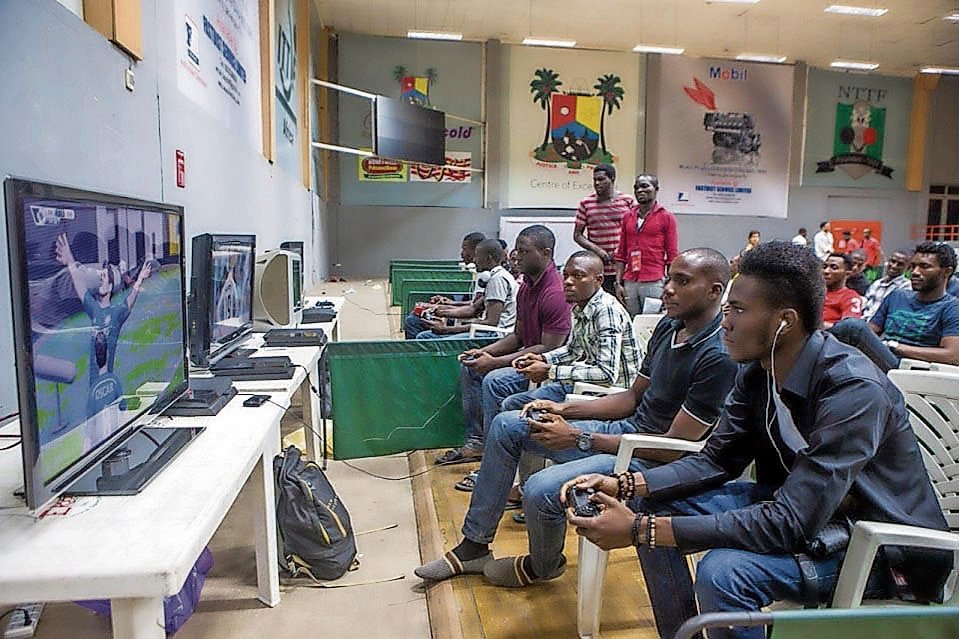
Teddy Cossoko, founder of Masseka Game Studio, announced the winding down of distribution of third-party mobile titles on the continent. Mobile game monetisation in Africa, he says, is struggling due to low conversion to paying users, issues with ad monetisation, and payments infrastructure. The mobile strategy is giving way to the Oloroun PC platform, designed for a higher-spending audience and a more sustainable economy.
Masseka Game Studio operates across Africa and the MENA region. Their distribution and technology platform, Gara, was used to test monetisation and study player behaviour in different countries on the continent.
Mobile monetisation has hit a wall
The reasons for the stagnation of the mobile direction form a clear sequence. The share of paying players remains extremely low. Ad revenue is virtually nonexistent. Carrier billing partnerships proved costly and slow to roll out. Competition in the Play Store, flooded with clones, makes marketing almost impossible. Industry statistics on mobile gaming in Africa are often skewed by the inclusion of betting and gambling in the overall figures.
Testing across more than 10 African countries yielded concrete figures. Only about 8% of players converted to paying users. The remaining 92% of the audience could not be monetised through traditional advertising. In carrier-billing case studies in Senegal and Burkina Faso, minimum monthly marketing budgets were €50,000 ($59,000), with low successful charge rates and high revenue shares taken by telecom operators. “For a startup like mine, that level of spend is simply impossible,” Cossoko noted.
What’s next for Gara and the studio’s own mobile games
Gara is ending the distribution of third-party mobile games. At the same time, the studio continues to develop its own titles. Among them are Jabari and Mini Coupe. The latter showed strong organic traction within a telecom super-app in Benin with zero marketing spend.
Gara’s new focus shifts toward parents as the core audience. The platform’s payments and analytics stack is being repackaged into a standalone monetisation layer for African developers.
Oloroun and the hidden PC market
Oloroun is a new PC game distribution platform. The bet on PC is explained by a focus on players with stable access to hardware and discretionary spending, less dependence on extreme scale, and a clearer value proposition for the core audience.
Observations in YouTube, Facebook, and WhatsApp communities revealed active PC ecosystems. Gamers in these communities regularly spend $18–$23 per month. “In Africa, any mass-market product must meet an essential need. Video games in their current form are not for most of the population,” Cossoko explained.
Why the PC segment’s economics look different
The PC audience shows a higher willingness to pay, better retention, and significantly less pressure from clones compared with mobile app stores. Official data, in Cossoko’s view, underestimates PC and overestimates the spending power of the underage mobile audience. “From a revenue standpoint, this changes everything,” he said.
The iGaming segment where people are willing to pay
Africa is now seeing the same trend as in developed markets such as the United Kingdom or Australia. This is about growing interest in iGaming. And although the reasons for this interest differ, the direction remains the same.
African players are willing to spend money on virtual gambling games, especially after they use the bonuses offered by most online casinos. According to information that is available if you open site about online casinos with free cash, major operators with international licenses use different formats of no-deposit bonuses to attract players. On average, the data suggests that about half of players return and top up their deposit after using bonuses. Another roughly third become loyal users, which is a very high figure.
A 40% commission—and the cost of building a market from scratch
Oloroun sets a 40% commission. The logic is that these funds finance building the market and infrastructure from scratch: payments, DRM, support, anti-fraud, and education systems. Comparing it to the commissions of global platforms, Cossoko says, isn’t valid, because a mature market in Africa simply does not exist. “Our role is not to compete with global platforms on convenience. Our role is to build a viable ecosystem in Africa. And that costs money.”
Payment reality dictates the model
“The main blocker is payments, and everything else follows from them,” Cossoko emphasised. Card penetration in most African countries is below 5%, while more than 70% of the population uses mobile money. The classic $10–$50 purchase model doesn’t work well in local conditions. Oloroun is launching with free-to-play PC shooters supported by microtransactions, a Daily Pass for €0.80, and optional premium purchases. The strategy relies on mobile money and repeat payments.
Year one—and ambitions on the horizon
The estimated potential user base is 35 to 45 million users with PC hardware across Africa and MENA, of whom 27 to 31 million are active gamers. Year one focuses on three cities: Dakar, Abidjan, and Accra. In parallel, talks are underway about being preinstalled on PCs to reduce customer acquisition costs. Long-term targets include 2.45 million MAU and a blended ARPU of €8.18 per month.
The catalogue is built on the 80/20 principle. Priority is given to international titles to match player expectations. African games are featured on the storefront selectively if two criteria are met:
- proven production quality, design, and stability;
- or the developer’s ability to rally an active community.
If at least one of them is met, the platform provides prominent features and support.
Oloroun is aimed at sustainable growth through repeat payers and organic growth, rather than inflated metrics. Cossoko expressed hope that at least one major international publisher with a “pioneer spirit” will support the launch—for example, by providing a well-known AAA title that runs well on mid-range PCs and is suited to the hardware realities in Africa.
Feature image: supplied
DISCLAIMER: This article is sponsored and does not substitute for professional advice or help. Any action you take based on the information presented in this article is strictly at your own risk and responsibility.
