

(Andrey_Popov/Shutterstock)
Across the world, diabetes is disrupting the lives of hundreds of millions of people. Current estimates put the number at about 589 million adults, roughly one in every nine, and projections suggest it could even pass 850 million within a generation. And that is just the adults we know about. Many view diabetes as a minor health condition, but that is not always the case. The disease claimed 3.4 million lives in 2024, translating to a life lost every nine seconds.
The picture in the United States is equally alarming. Roughly 38 million Americans live with diabetes, affecting more than one in ten households. Some studies show that nearly half of the U.S. population has diabetes or prediabetes. Millions are unaware that they are at risk. Without treatment or lifestyle modification, they could suffer serious consequences.
With such sobering figures, it is not surprising that the health services are under pressure to catch cases earlier and prevent more people from developing the disease. That involves everything from lightening the load on patients to improving results for entire communities.
Can artificial intelligence make a real difference in the fight against diabetes? It looks promising. AI has the potential to make a significant difference. It can do a lot of what we haven’t been able to do with more traditional and manual methods. AI can analyze vast data sets to spot patterns, forecast changes in glucose levels before they happen, help doctors tailor treatment plans, and enable companies to develop better treatment tools. It can also inform public health programs that aim to reach people well before the disease takes root.

(CI Photos/Shutterstock)
A study in Frontiers in Endocrinology found that AI models trained on continuous glucose monitoring data (GMD) could predict blood sugar levels an hour ahead with a high degree of accuracy. For a patient, that extra hour is not just a statistic; it’s a game-changer. It is a chance to eat something, adjust insulin, or slow down before a dangerous spike or drop happens.
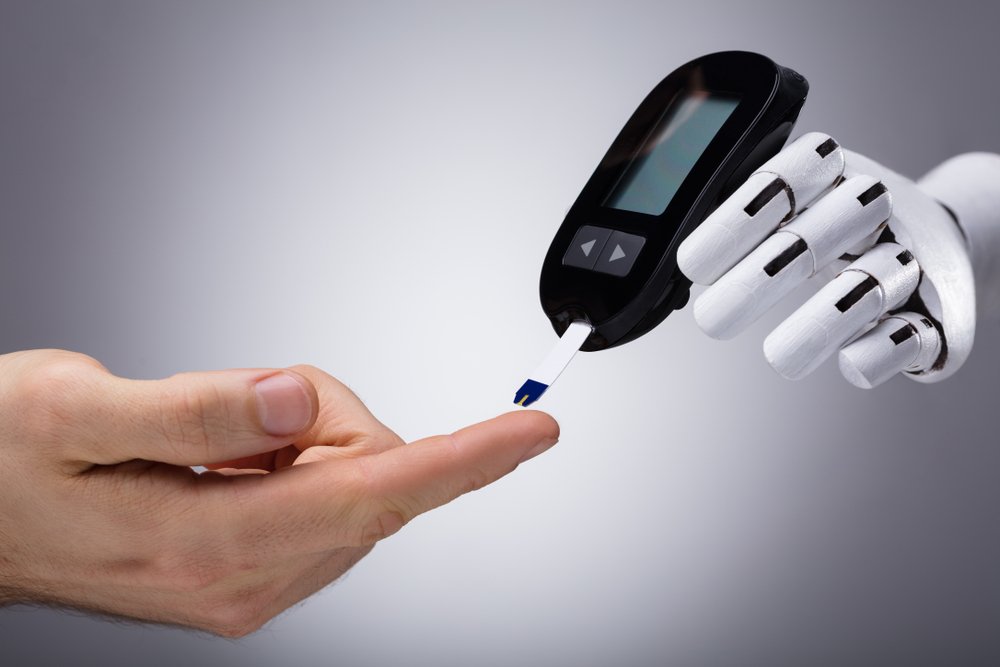
That same predictive approach is now built into consumer devices. Dexcom’s G7 and Abbott’s FreeStyle Libre are just a couple of examples where this AI-powered technology can alert users when their glucose is likely to move outside the safe range.
For people dealing with frequent highs and lows in glucose levels, these alerts can reduce emergencies and help keep levels more stable. Additionally, it can help boost confidence in day-to-day management. Over time, the data can also reveal personal triggers, giving doctors better insight into how to fine-tune care for each individual.
Researchers are also using AI to get a closer look at the biological drivers of diabetes. The goal is to have a long-term vision on how it is at a higher risk of developing diabetes.
At Stanford Medicine, a team developed a model that examines detailed glucose and metabolic data from patients. This can help us determine whether a case is primarily caused by insulin resistance, beta-cell dysfunction, or incretin deficiency. In trials, the model reached an impressive 90% accuracy for each pathway. That’s not bad for a piece of software that never went to medical school.
This level of unprecedented insight also changes the conversation with the doctors. Someone with insulin resistance might get a plan centered on improving sensitivity through medication and exercise. Someone with beta-cell dysfunction might be guided toward preserving or boosting insulin production. It is a step away from generic care plans and toward treatment that reflects the reality of each person’s condition.
On a broader scale, AI is being tapped for detection and prevention. Google, through its health division Verily, has built a retinal imaging system that can detect diabetic retinopathy and even cardiovascular risk factors from a single eye scan. It uses computer vision and deep learning models trained on thousands of labeled images to detect subtle changes in blood vessels and retinal tissue that can appear years before symptoms are noticeable.

(Shutterstock AI Generator)
The technology is already in use in screening programs in India and other countries, reaching people who may never have access to a specialist exam. Google is also exploring how wearable data from Fitbit devices can be analyzed to spot early metabolic changes. This signals a push toward making AI-powered diabetes detection and prevention part of everyday life.
AI is also helping in the search for new treatments. We know that drug discovery has always been a slow and expensive process, but machine learning is speeding up the early stages. Models can scan through millions of molecular structures and predict which ones are most likely to target specific biological pathways involved in diabetes. This allows scientists to focus their lab testing on the most promising candidates.
Some teams are using GenAI to design entirely new molecules that could improve insulin sensitivity or help protect the beta cells that produce insulin. This approach can reveal chemical possibilities that human researchers might not think to try. While it is not the cure the world is hoping for, it is creating opportunities for therapies that are more effective and come with fewer side effects.
We are still in the early stages, but AI is already making an impact. It is now part of nearly every stage of diabetes care, from predicting glucose swings to guiding treatment, expanding screening programs, and accelerating drug development. It may not eliminate the disease, but it is giving us stronger tools to manage and fight this global epidemic.
Related
