

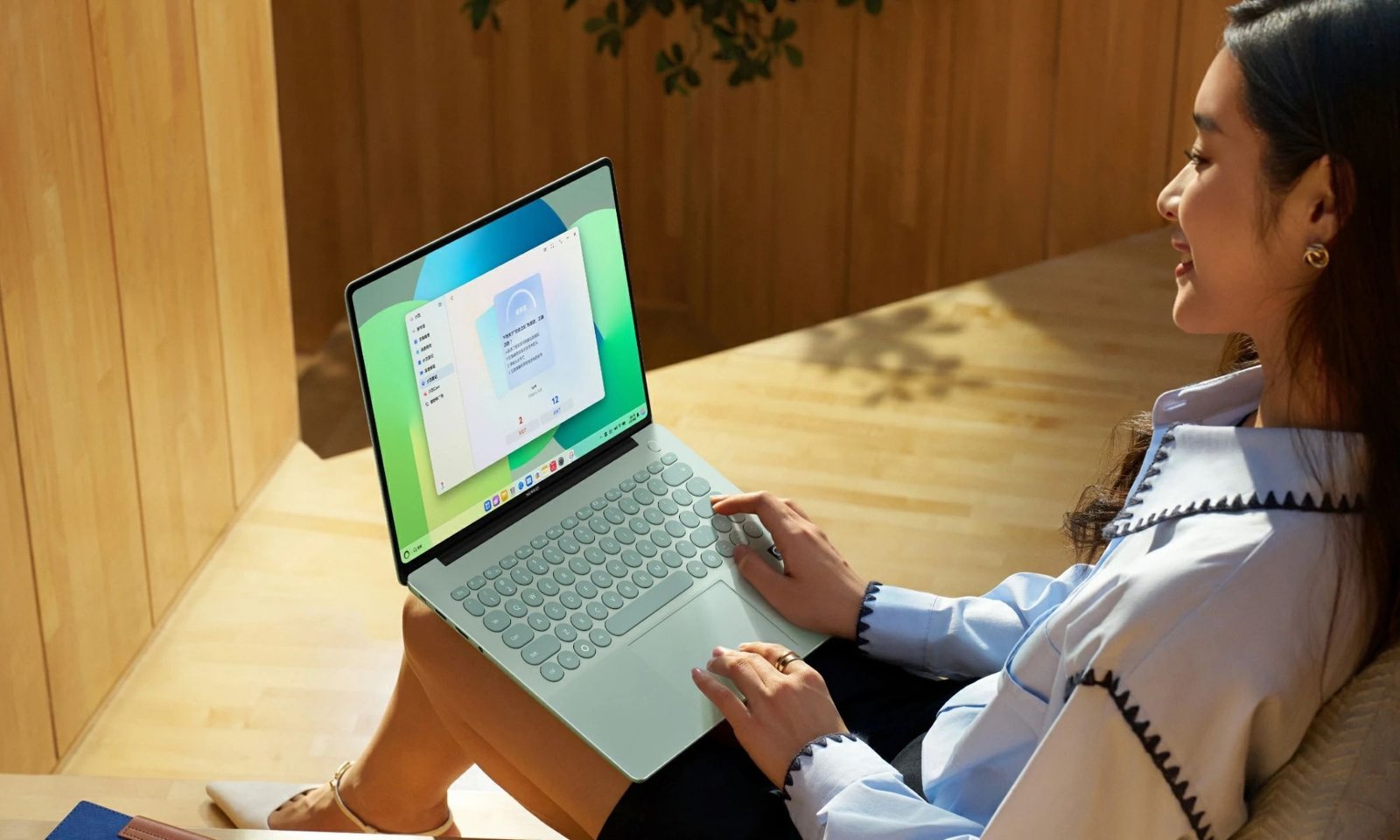
Huawei is a rare Chinese firm that found a way to grow during the first quarter of 2026. With the MateBook 14 HarmonyOS Edition hitting shelves, the brand might grab a lot more eyes. People blame Huawei for copying Apple without clear reason. Take the P9 phone, which used the same weird star screws in the exact same spots as iPhones. But my Huawei MateBook 14 HarmonyOS Edition first impressions show an artist shaping widely loved concepts into something fresh.
Lightweight build, loud personality—until the keyboard ruins the mood
A quick look at Huawei’s MateBook 14 HarmonyOS Edition brings the MacBook Neo to mind. It keeps a thin profile and compact body with color options like Wild Green, Cherry Blossom Pink Gold, and Space Gray. When Apple launched the MacBook Neo, I expected strong appeal among students. It works as a fashion piece for many users. Huawei aims at the same group.
The MateBook 14 weighs about 1.33 kg. You can hold it with one hand. It fits into a backpack and moves between campus and café life with ease.
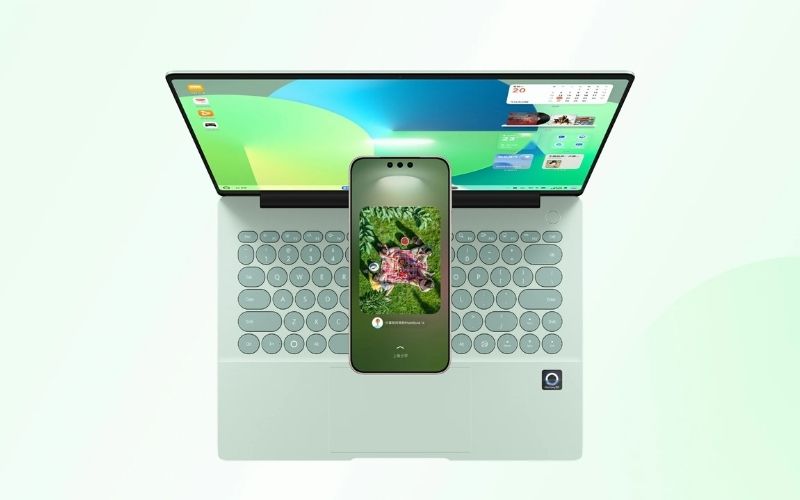
But the keys; I hate them. Round keycaps look awful for work since I want zero parts of a keyboard that mimics a vintage typewriter. Still, taste stays a personal thing, and if you find it cool, your opinion wins. Huawei claims the curved caps hug each finger while big arrow keys help your precision. It feels good, the brand says.
Design wins attention, performance must prove it
The 24 GB + 512 GB version of the MateBook 14 HarmonyOS Edition starts at CNY 6,599 (≈ $959). At that point, the design appeal meets a clear question about power. Users who need strong workload support may look toward MacBook Air instead.
Related: M5 MacBook Air vs. M4 MacBook Air: I know the upgrade isn’t essential—but it tempts me
After 2020 restrictions, US limited Huawei access to global chip design and manufacturing partners. Huawei shifted toward in-house work through HiSilicon chips. This raises a key question: can the MateBook 14 HarmonyOS Edition’s Kirin X90 act as Huawei answer to Apple Silicon?
The Huawei MateBook Fold introduced the Kirin X90 in May 2025 as an 18-inch foldable OLED device with HarmonyOS. We still need see how the Kirin X90 handles tasks in the MateBook 14. For now, the MacBook Air with M5 chip still leads in efficiency, raw output, and creative app support.
120 Hz OLED on a budget? Huawei plays its strongest card
The Huawei MateBook 14 offers a sleek 120 Hz OLED touch screen. It feels more like a fancy tablet. Apple keeps 120 Hz tech for Pro gear. I love that Huawei gives us fast response times and less eye strain without a massive price hike.
For notes, sketches, and everything between
The Huawei MateBook 14 HarmonyOS Edition supports the M-Pencil Package (3rd generation). I’ve read that buyers place the M-Pencil next to the Apple Pencil in comparison. Some even bought the MatePad 11.5 tablet for the pen alone. It senses pressure, blocks palm touch, and keeps input delay low. Get the M-Pencil for €89.95 for notes in meetings and classes.
Not a copy—a competitor with intent
I see the MateBook 14 HarmonyOS Edition not as a mere copycat, but as a bold competitor that bridges the gap between high-end aesthetics and functional hardware. While the Kirin X90 still has to prove it can dance with Apple’s M-series chips, I’m impressed by Huawei’s willingness to offer premium features like a 120 Hz OLED touch screen at a much more accessible price point.
You should consider whether you value the seamless, fashion-forward portability of the MateBook 14 HarmonyOS Edition enough to trade away the established creative ecosystem of a MacBook. If you’re looking for a device that feels like a “Pro” tablet but works like a laptop, this might just be the versatile tool you’ve been waiting for. Do you think the inclusion of a high-refresh touchscreen is enough to make you switch from a traditional macOS or Windows setup?
Grigor Baklajyan is a copywriter covering technology at Gadget Flow. His contributions include product reviews, buying guides, how-to articles, and more.
